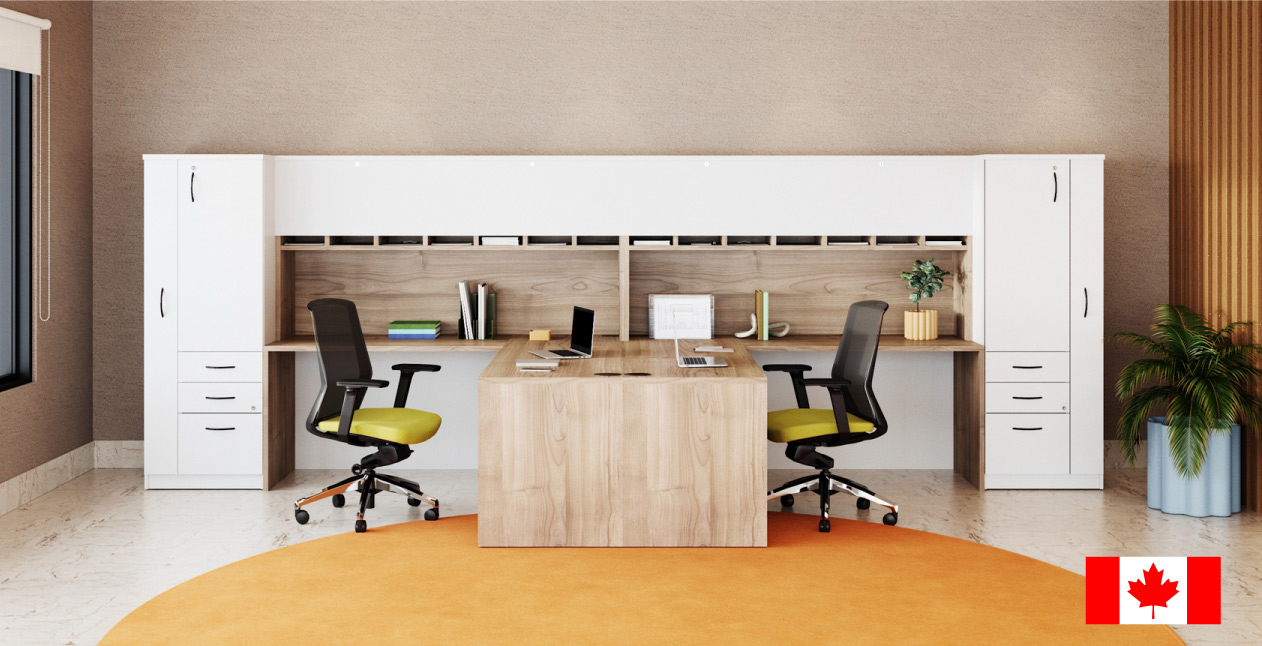
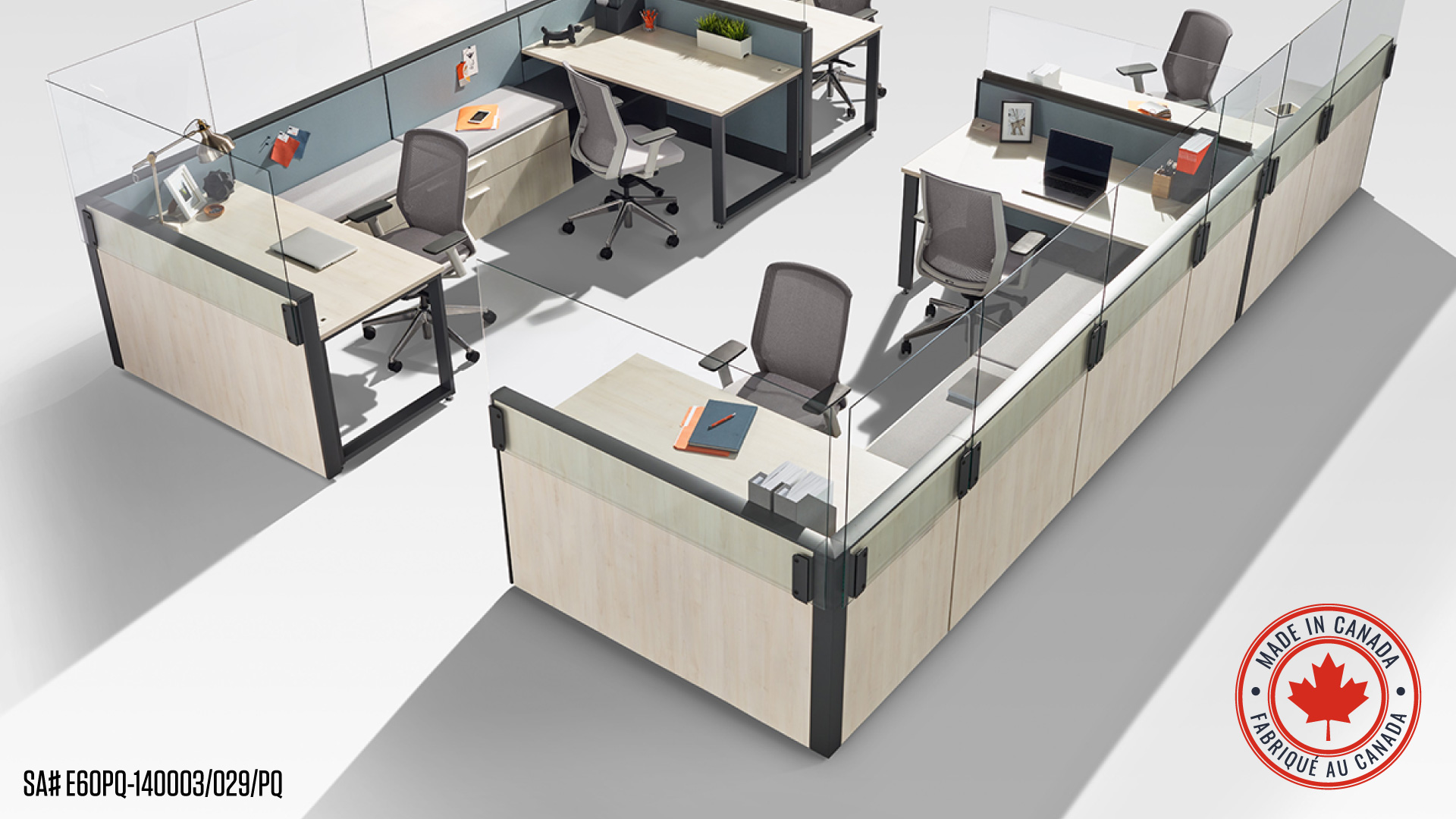
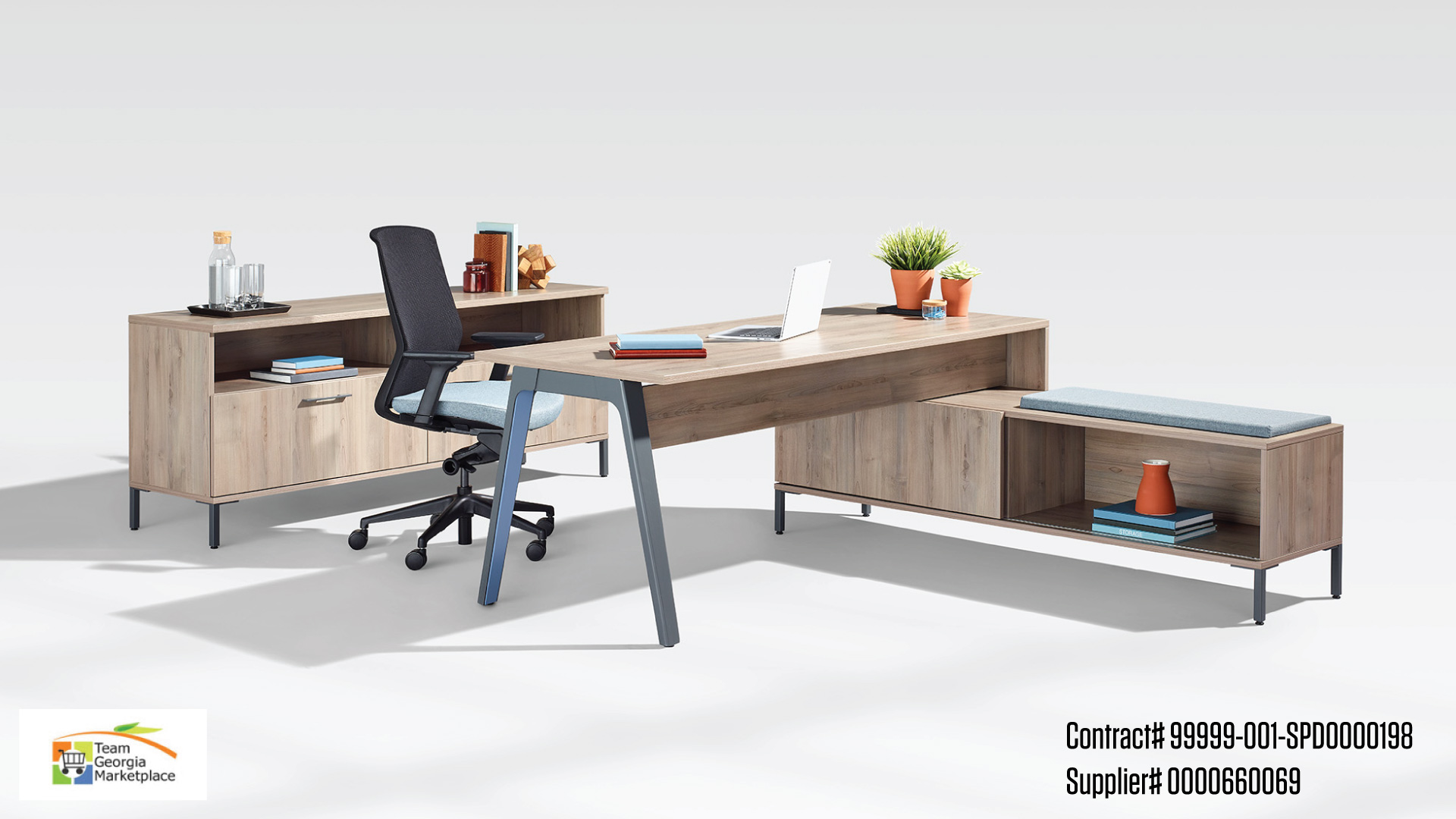
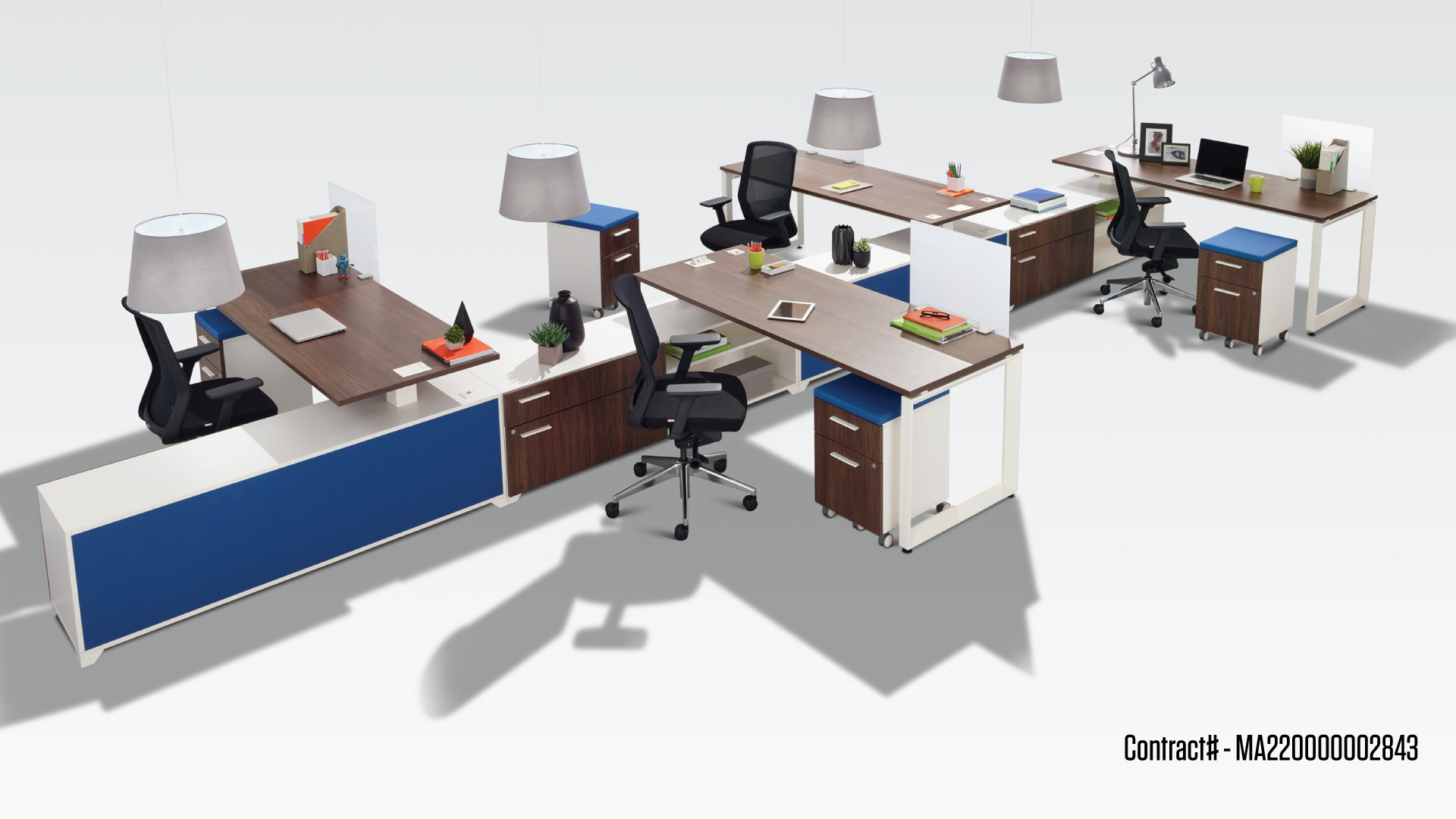


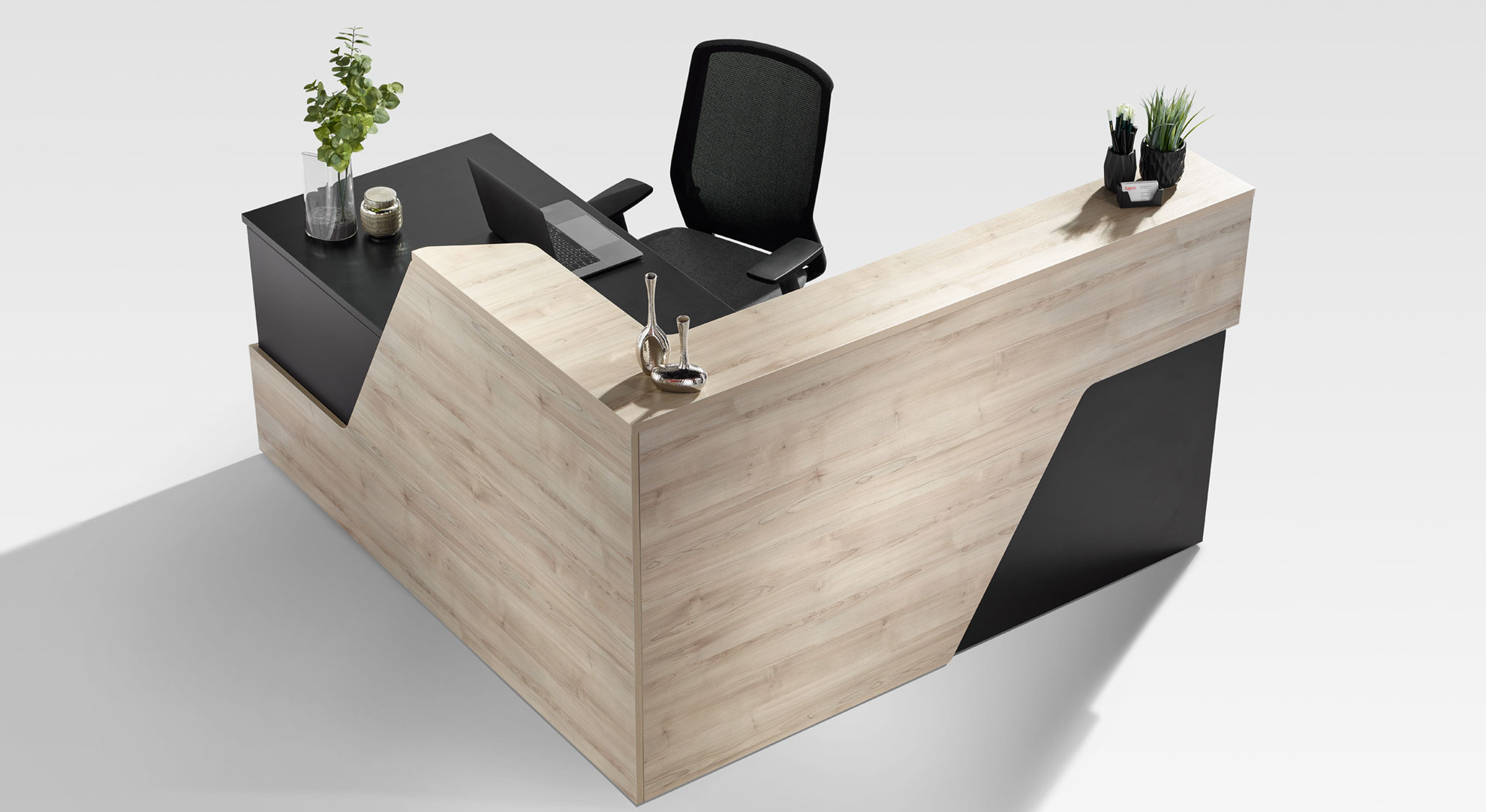
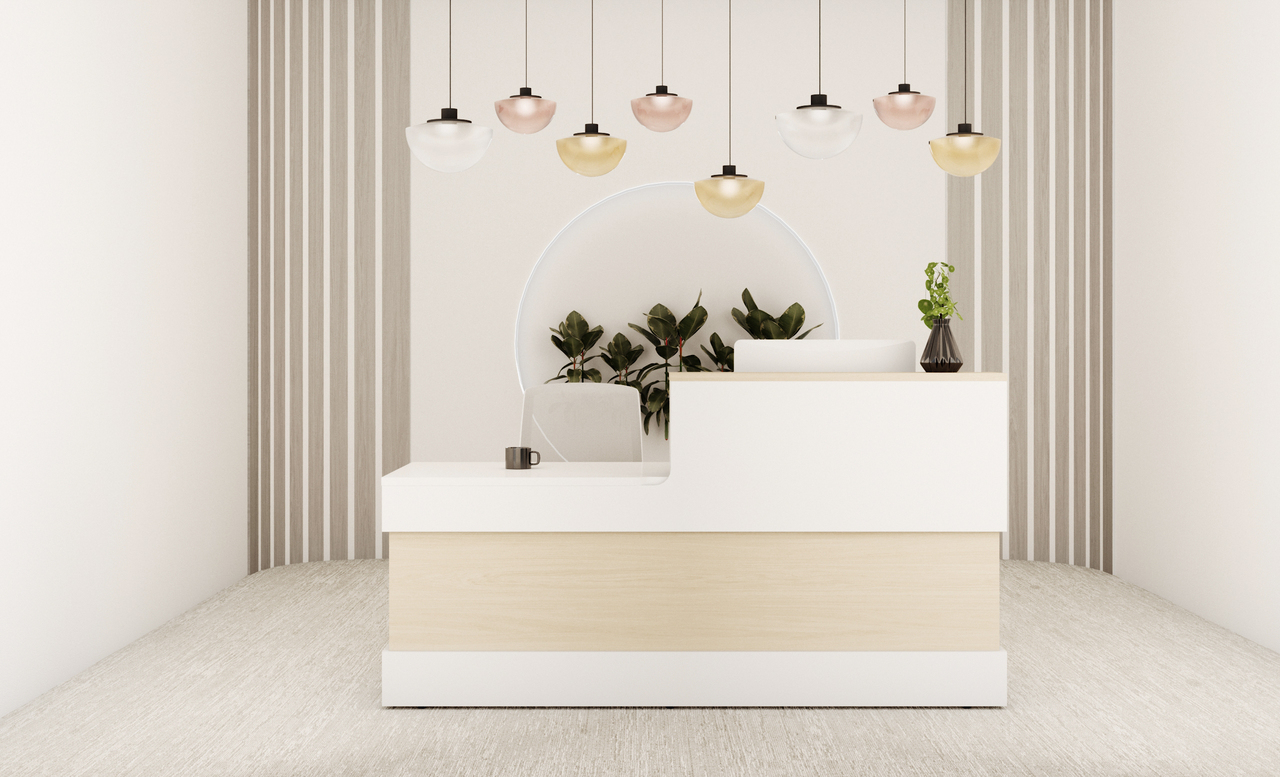
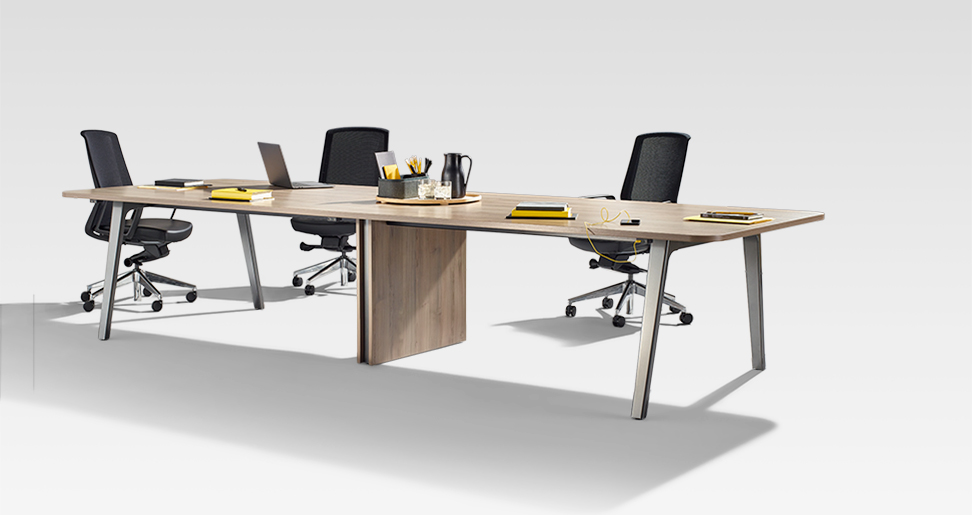
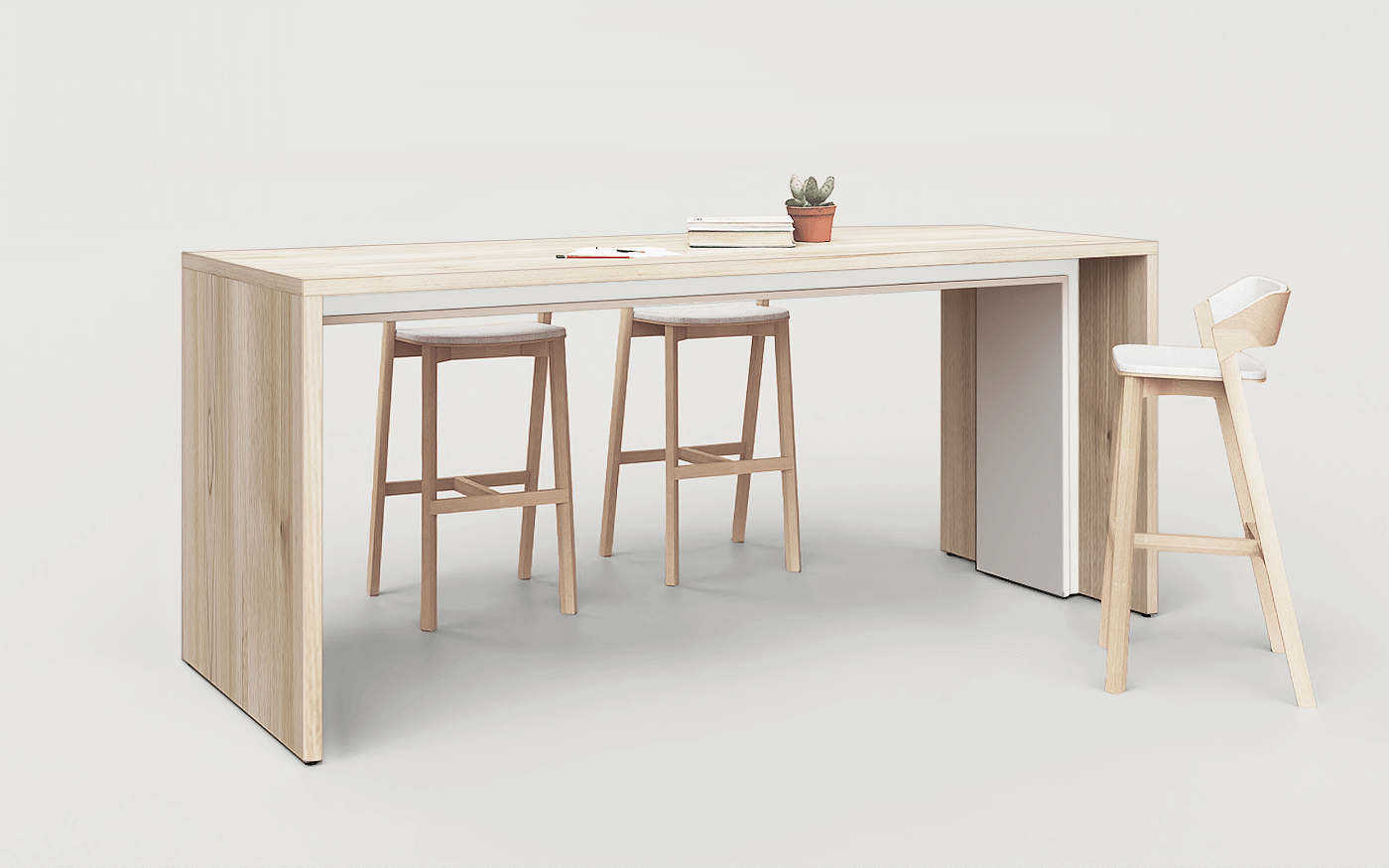
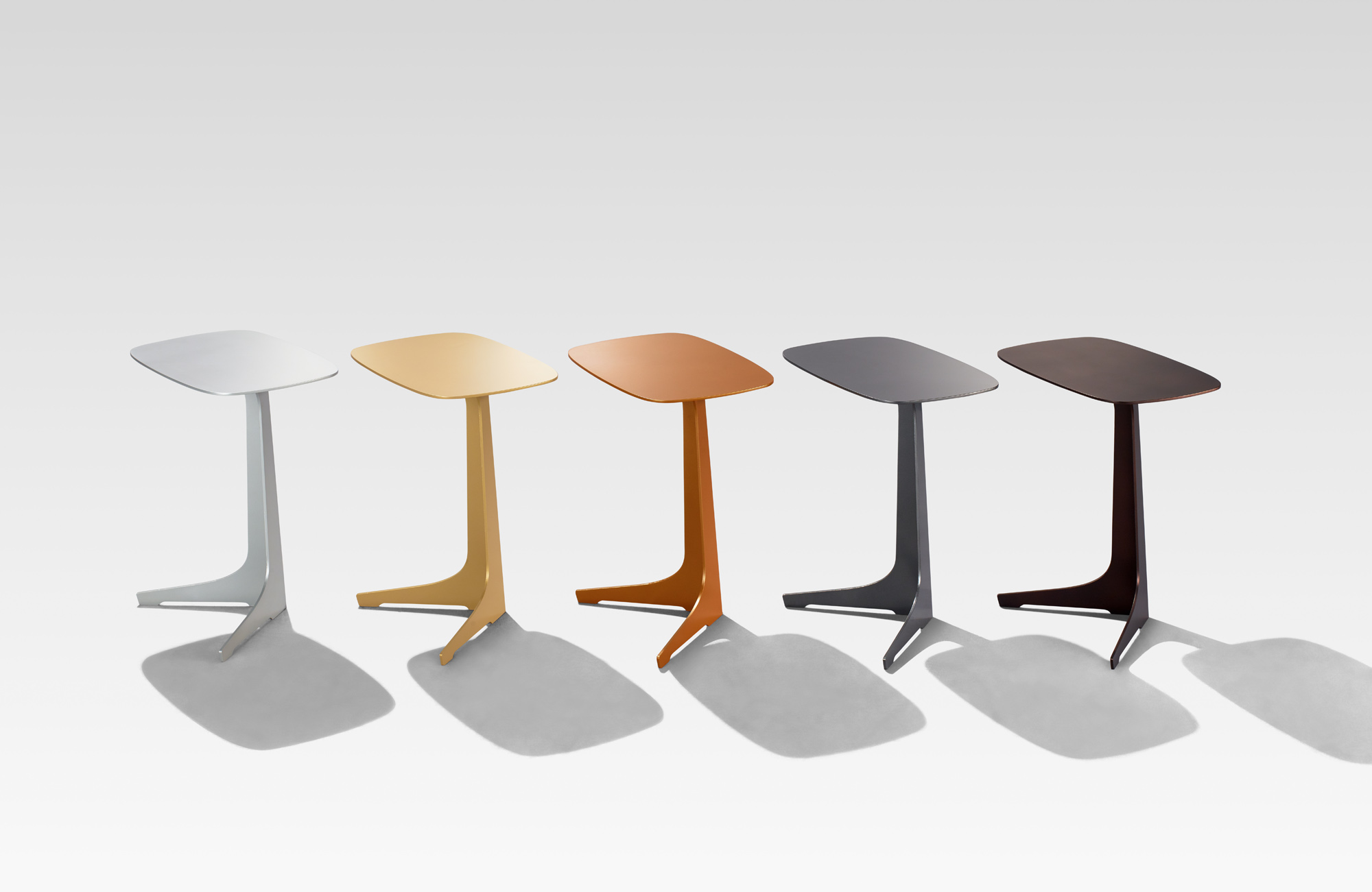
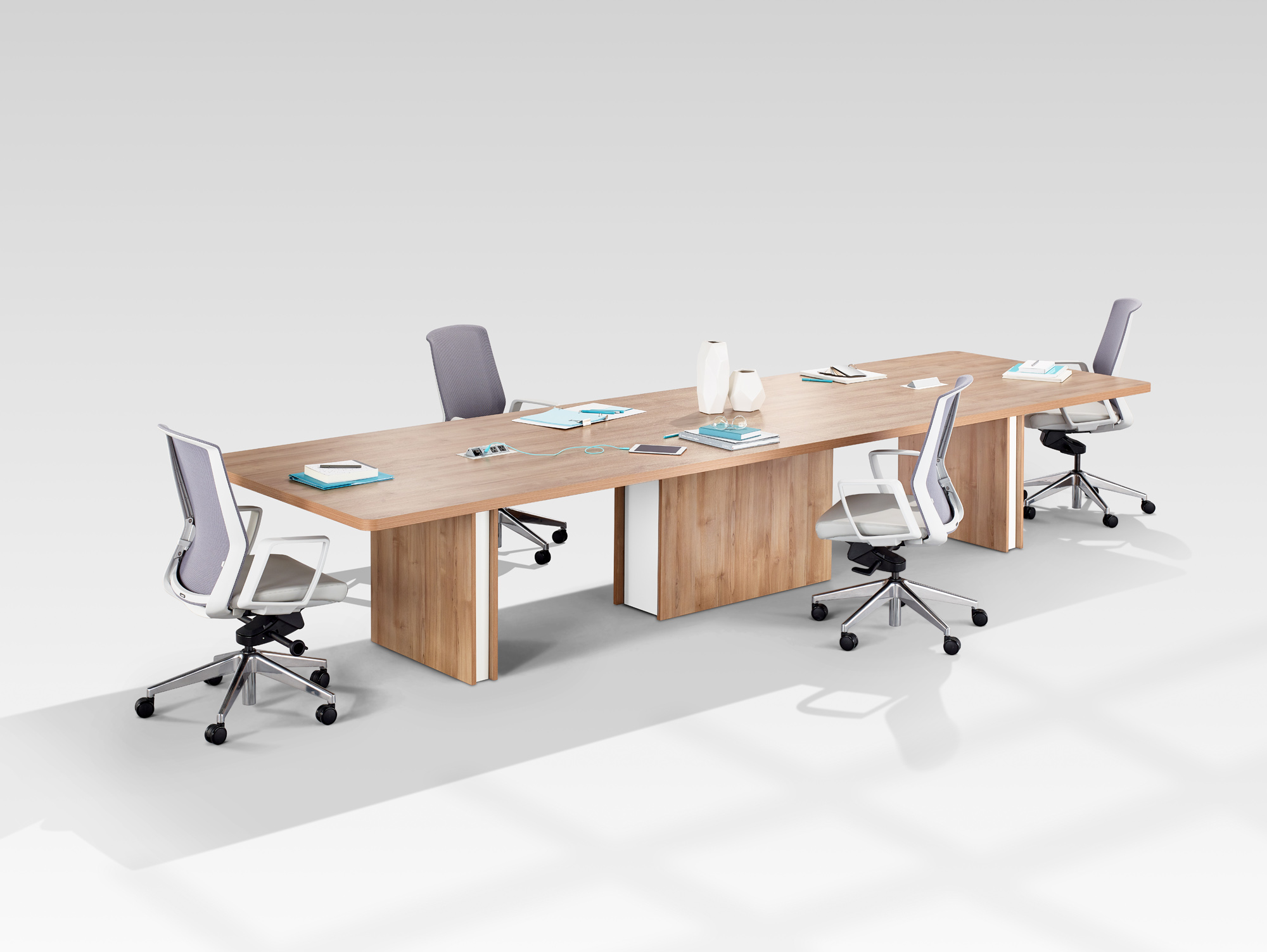
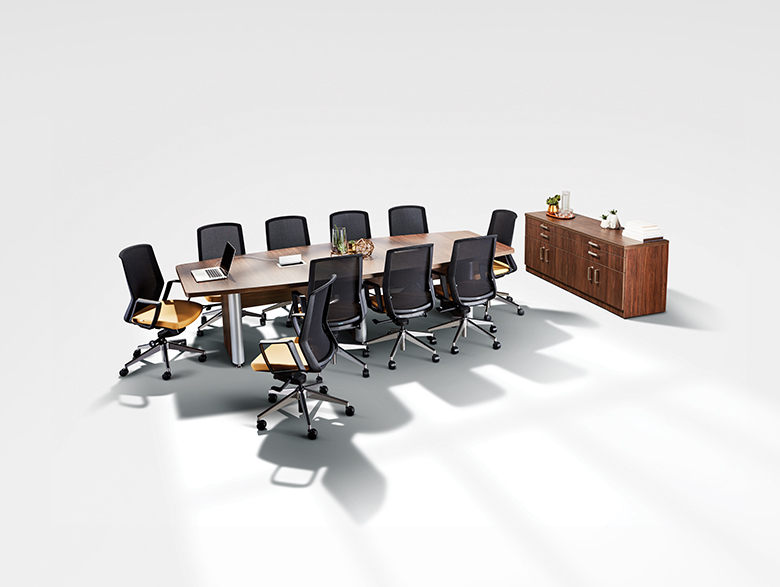
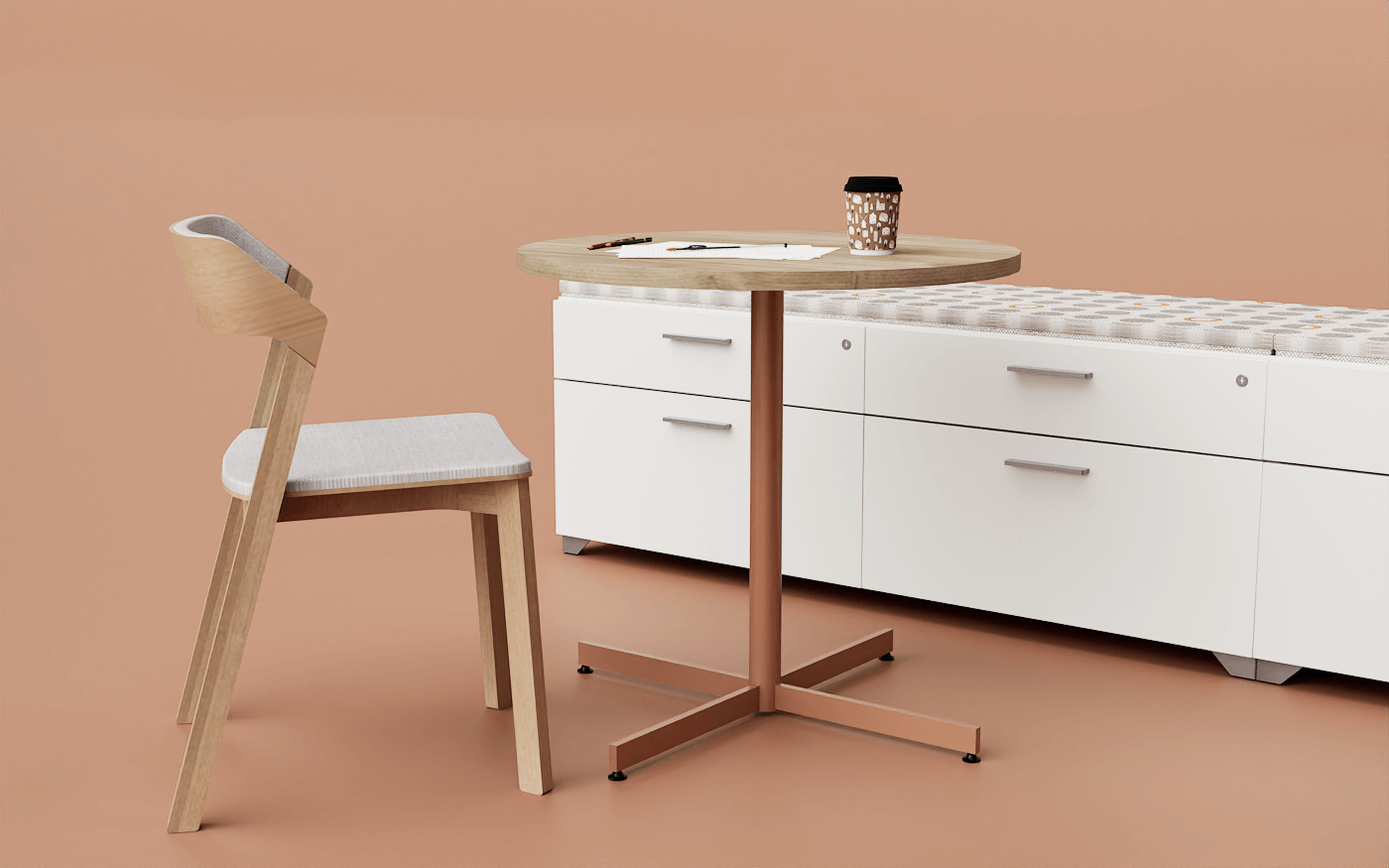
Today’s workplace is more diverse than ever before. For the first time in history, many organizations have up to five generations working alongside one another, each bringing different experiences, career stages, and perspectives to the office.
Yet successful workplace design isn’t about creating separate spaces for different generations. It’s about designing environments that support a wide range of people, abilities, workstyles, and career stages.
At first glance, it may seem that designing for a multigenerational workforce means creating different environments for Baby Boomers, Generation X, Millennials, and Generation Z. However, research tells a different story.
Studies consistently show that generational labels alone are poor predictors of how people work. Instead, workplace preferences are shaped by a combination of job role, personality, physical ability, career stage, and the tasks employees perform throughout the day.
For Designers, this represents an important shift in thinking. Rather than asking, “What does this generation want?”, a better question is, “How can this workplace support the widest possible range of people?”
Beyond Generational Stereotypes
It’s common to hear assumptions that Baby Boomers prefer private offices, Millennials thrive in collaborative spaces, or Generation Z expects technology to drive every workplace interaction. While these ideas have become common workplace narratives, research suggests they should be approached with caution.
Studies have found that age, life stage, work responsibilities, and individual preferences have a far greater influence on workplace behaviour than generational labels alone. In practice, two employees from the same generation may work very differently, while employees decades apart in age may share remarkably similar workplace needs.
This shift encourages Designers to move beyond demographic assumptions and instead focus on creating workplaces that are flexible, inclusive, and capable of supporting a broad range of users throughout every stage of their careers.
Designing for People
Although employees differ in age and experience, many workplace needs remain remarkably consistent.
Research continues to identify several universal factors that influence how people experience the workplace:
- The ability to focus without distraction
- Opportunities for collaboration, mentoring, and knowledge sharing
- Physical comfort throughout the day
- Accessible environments that support physical, sensory, and cognitive needs
- Choice over where and how work happens
- A sense of belonging, wellbeing, and autonomy
Designing around these shared human needs creates workplaces that naturally support multigenerational Teams while avoiding one-size-fits-all solutions.
Flexibility Creates Better Workplaces
One of the strongest themes across workplace research is flexibility.
Rather than expecting every employee to complete every task from a single workstation, today’s workplaces perform best when they offer a variety of settings designed for different types of work.
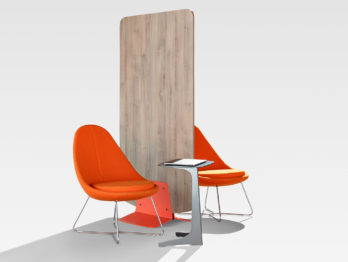
Successful workplaces give employees the freedom to choose between open and enclosed environments, seated and standing work, individual focus areas, collaborative spaces, and informal meeting settings depending on the task at hand. This variety allows people to work in ways that best support their productivity throughout the day.
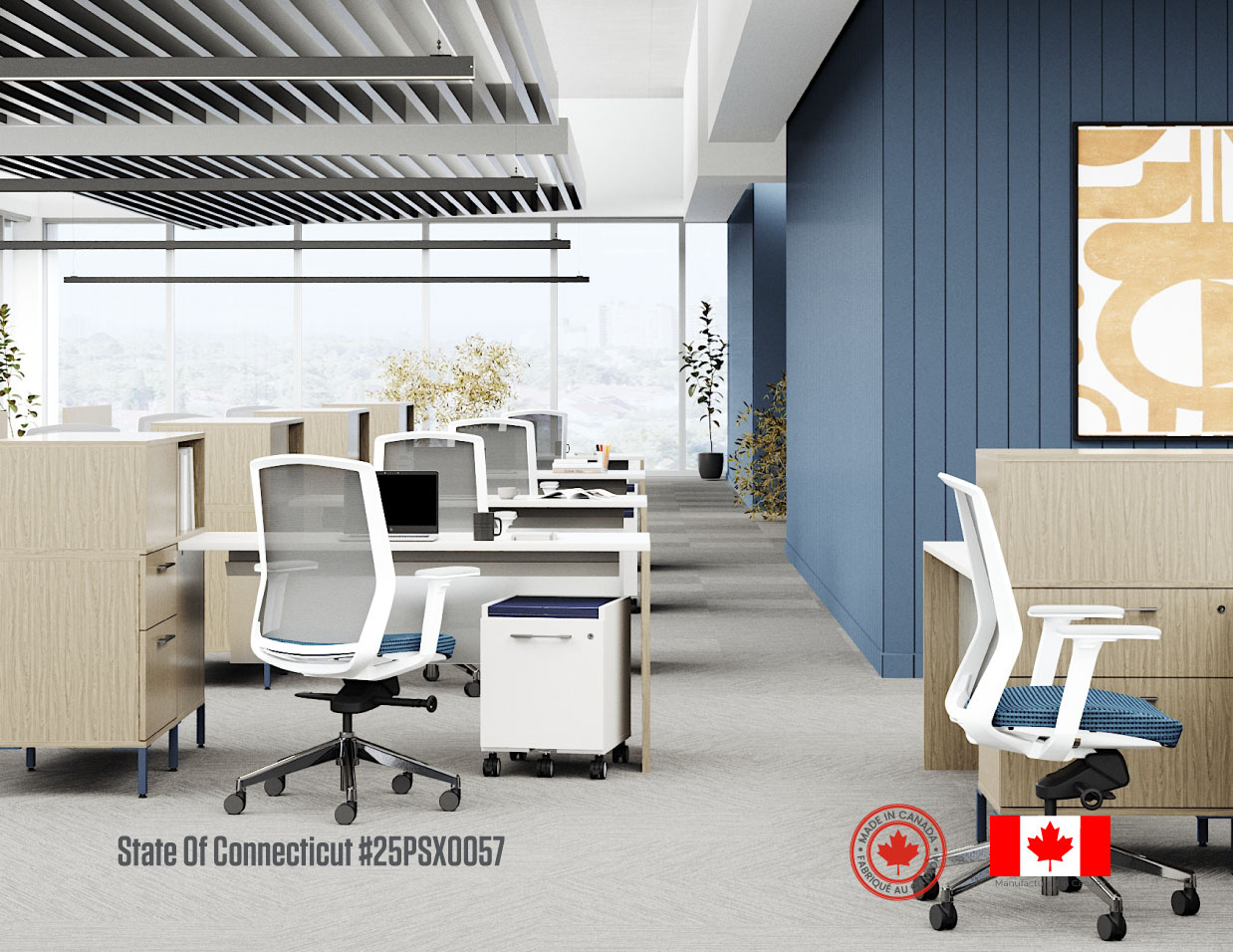
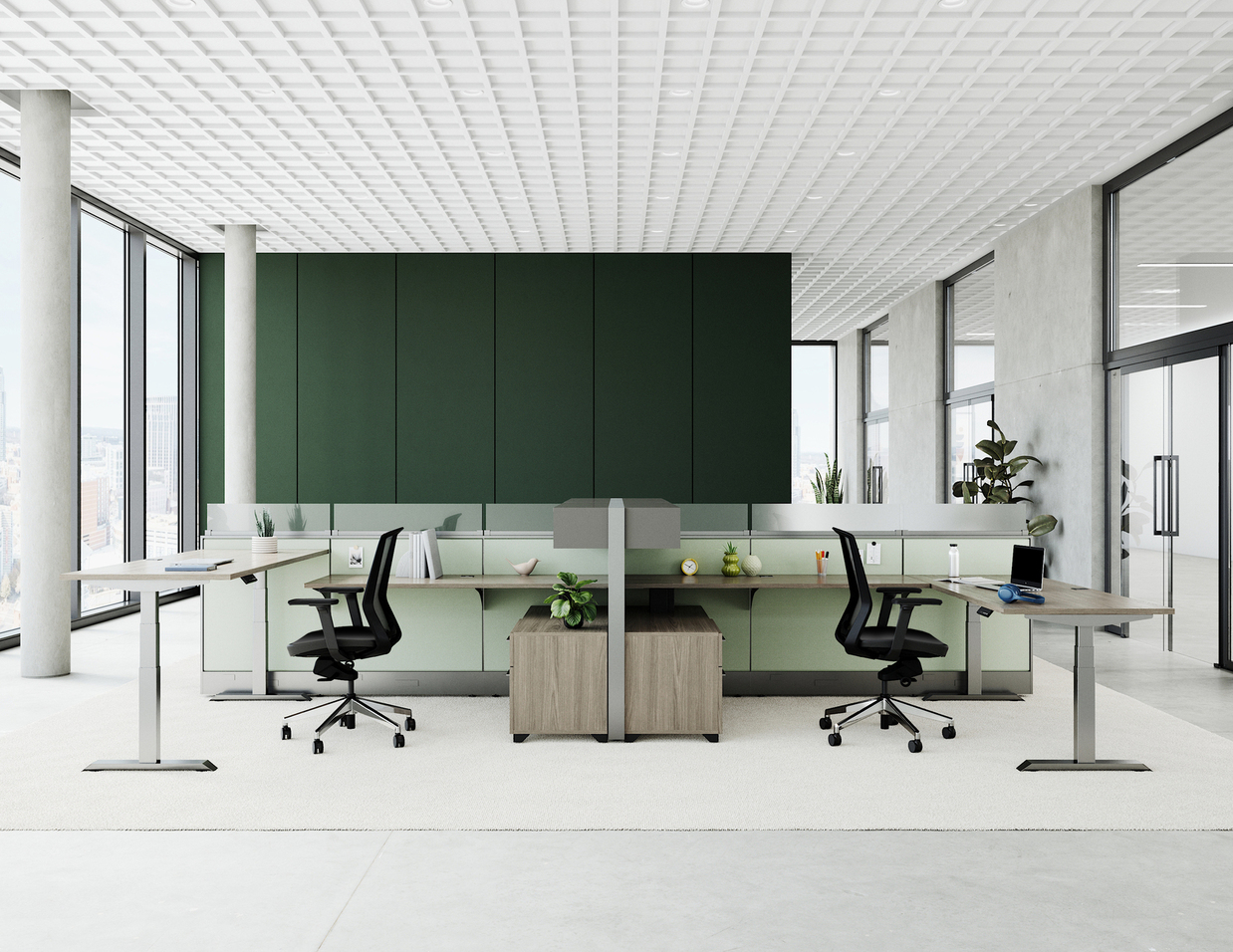
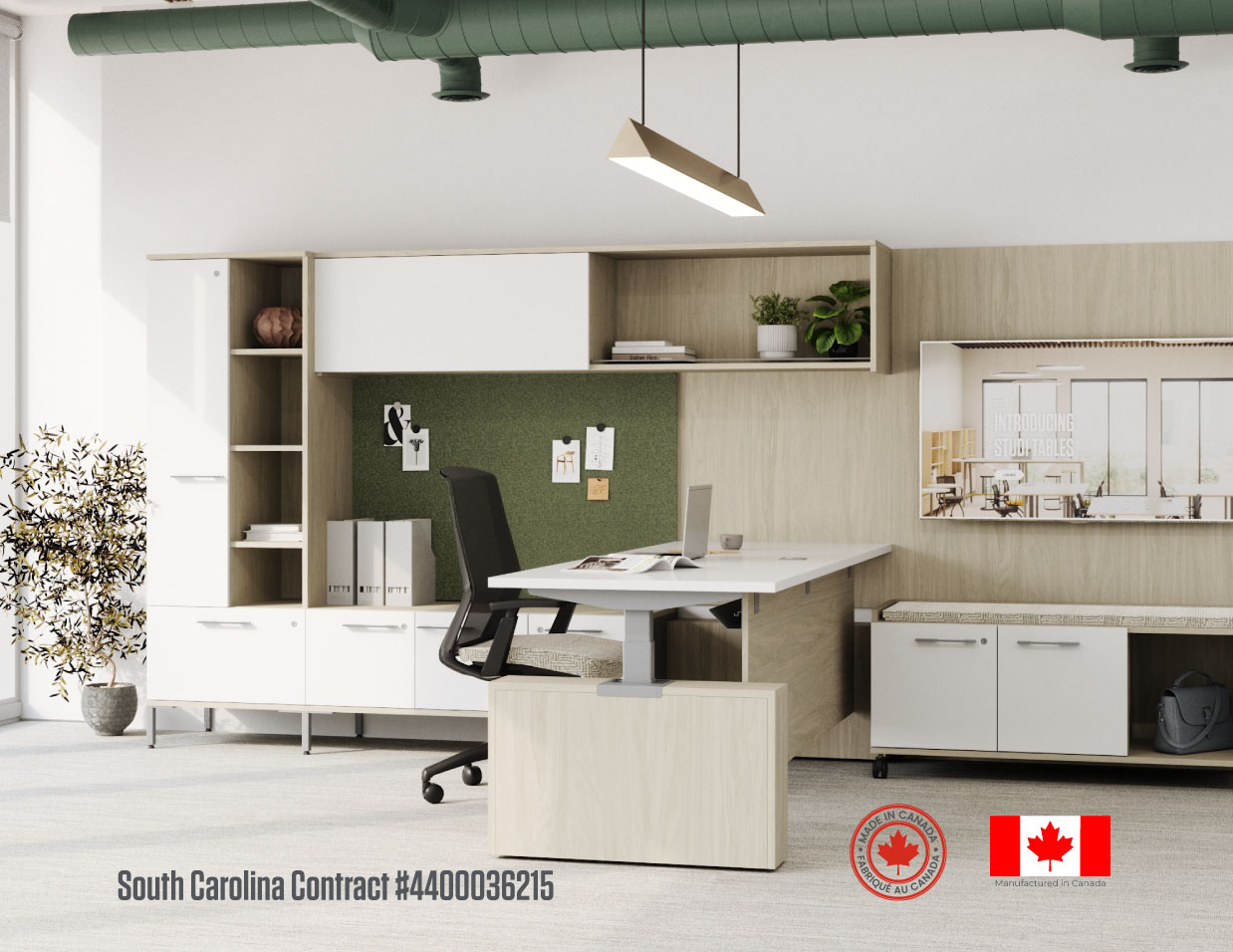
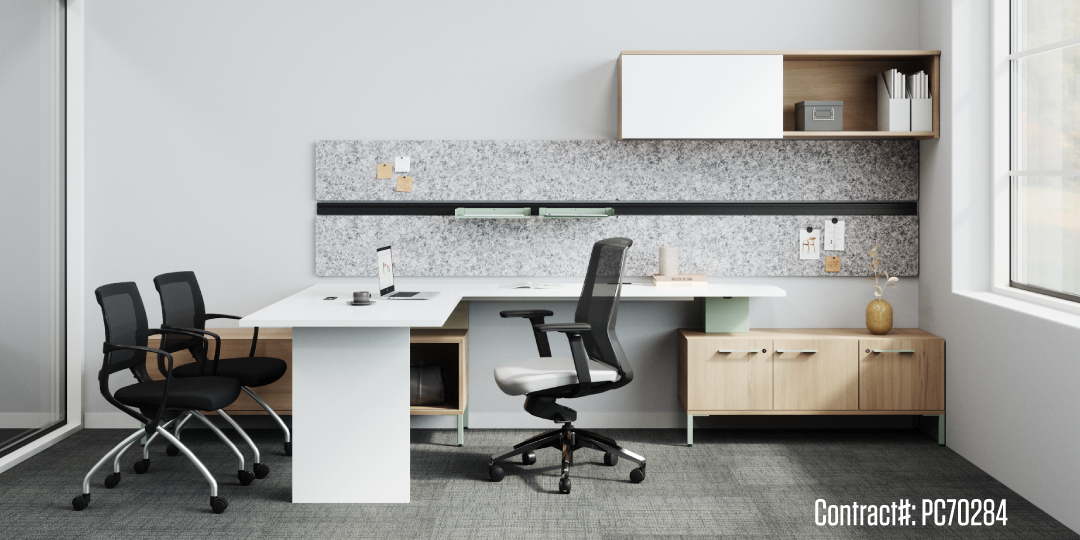
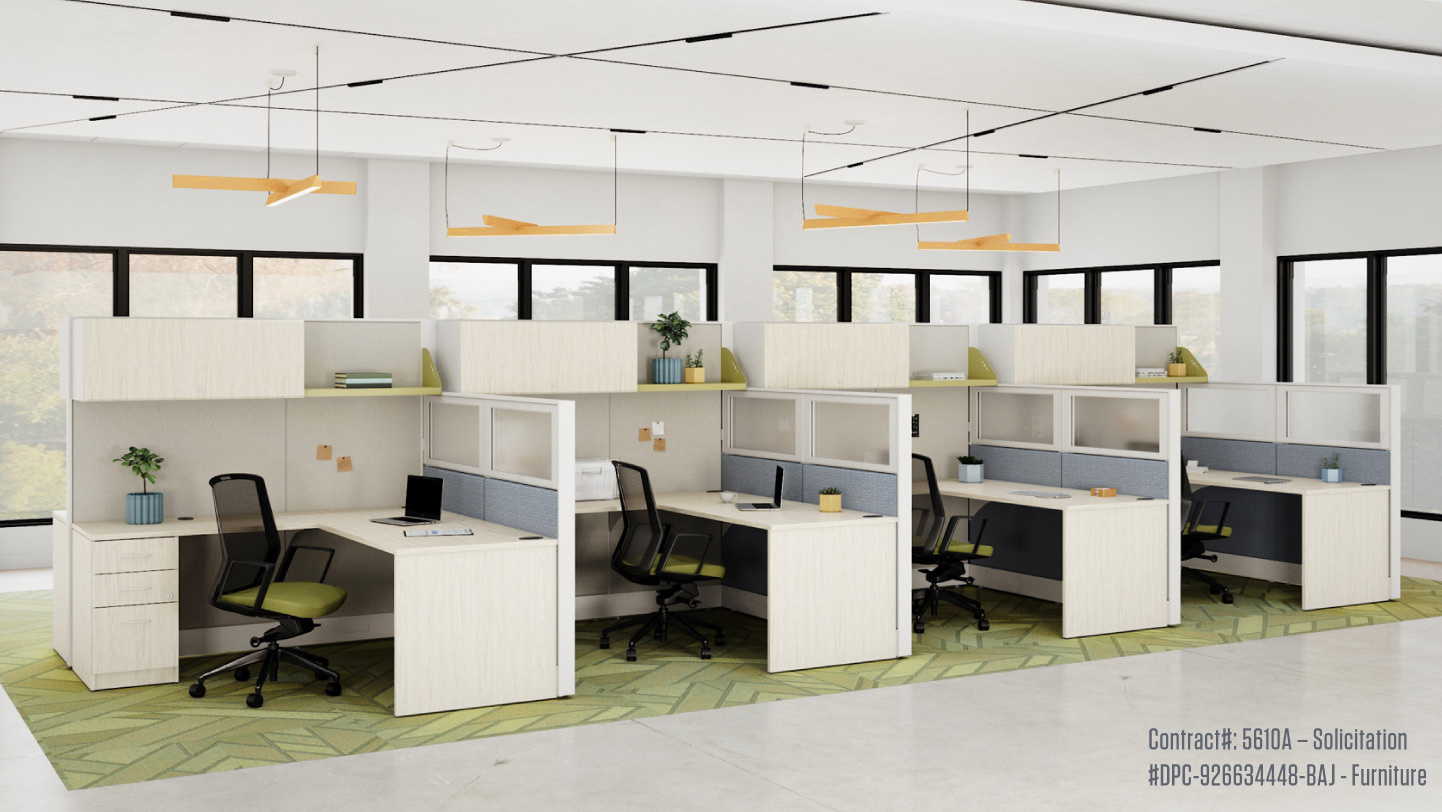
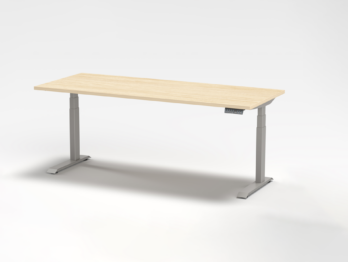
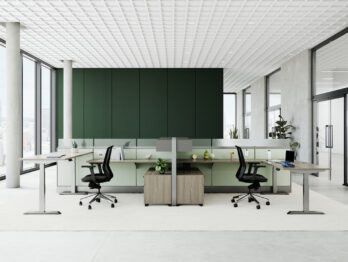
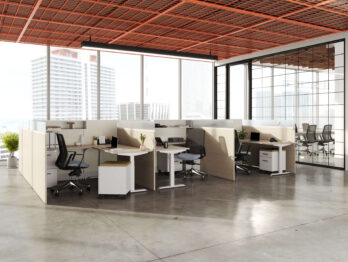
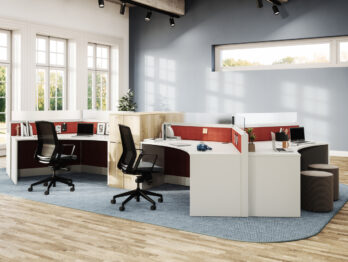
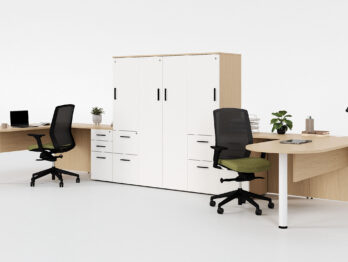
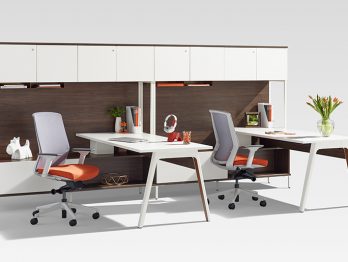
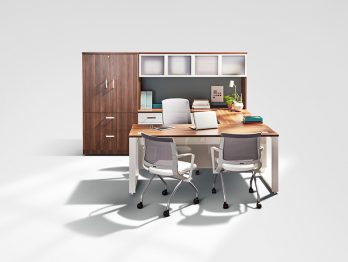
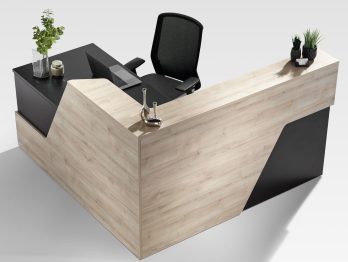
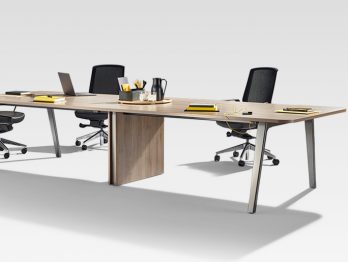
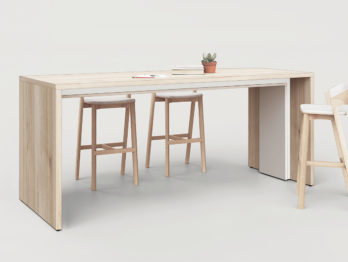
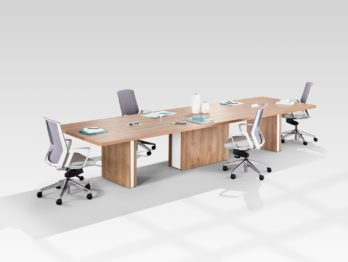
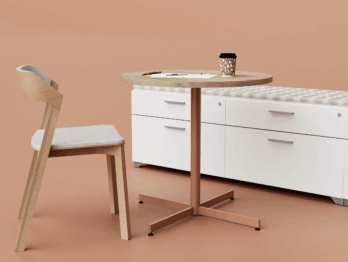
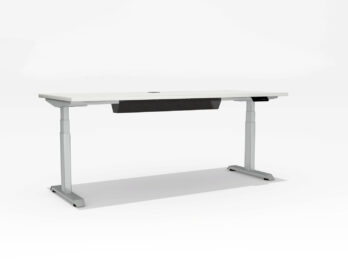
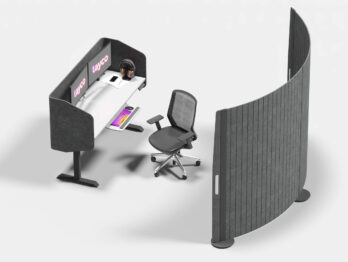
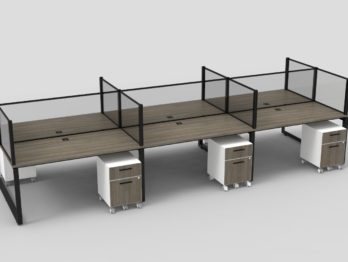
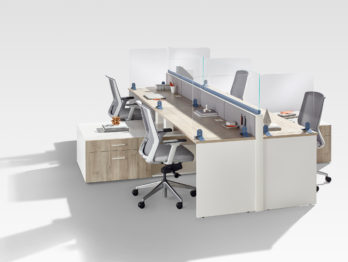
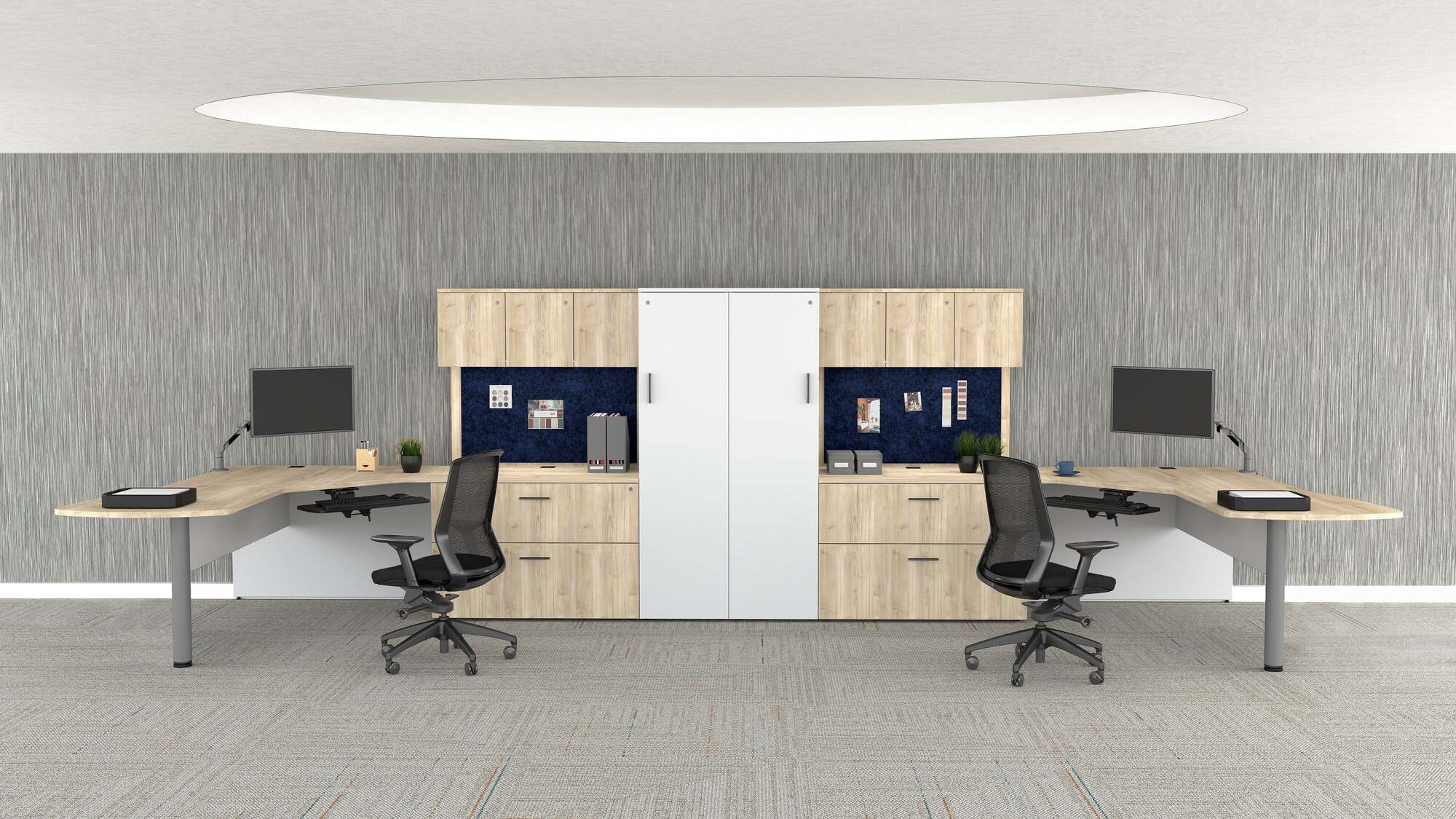
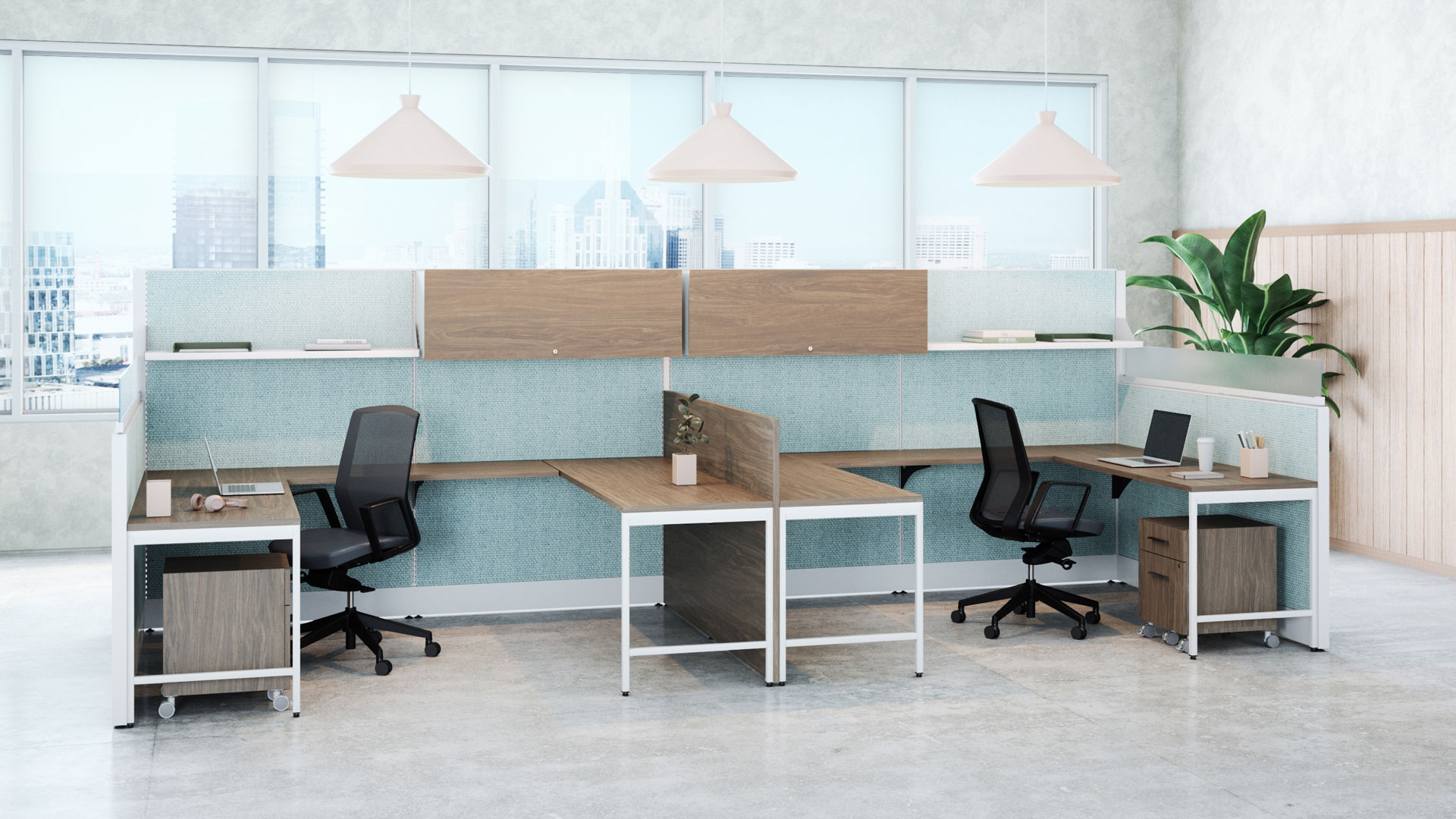
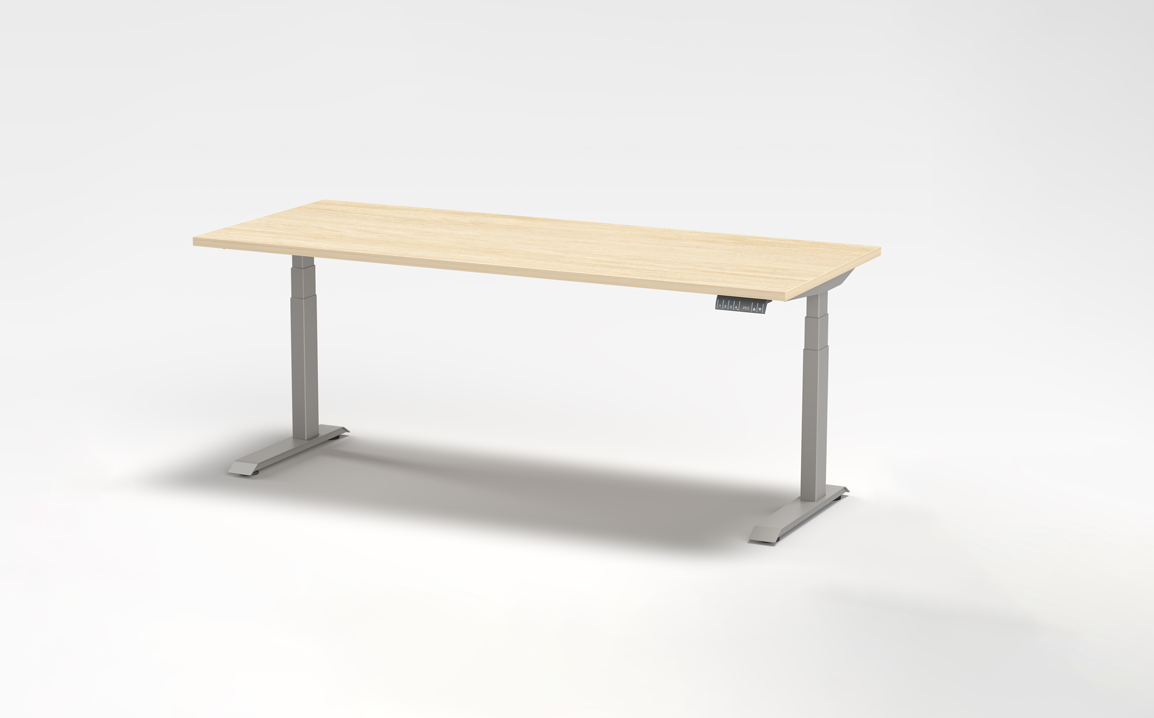
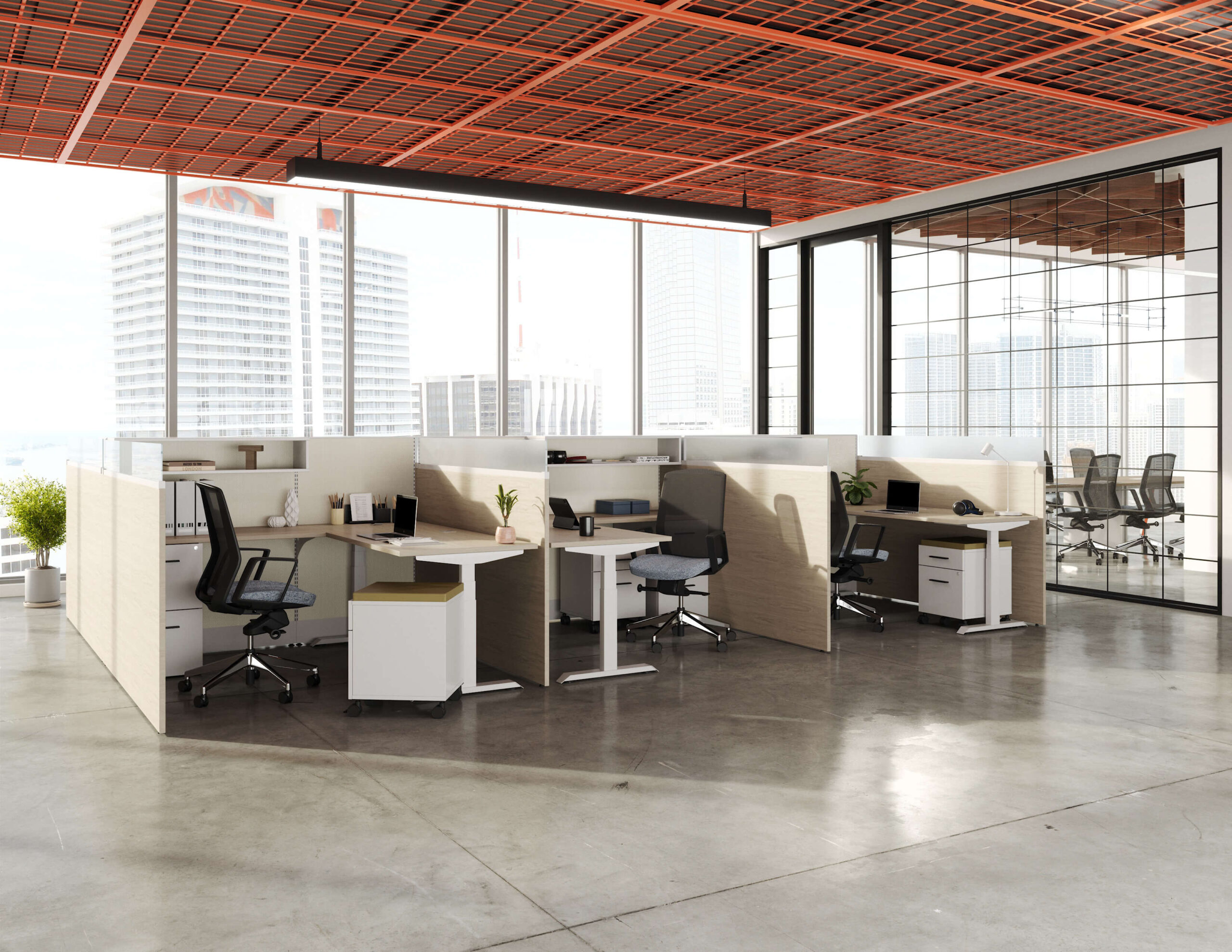
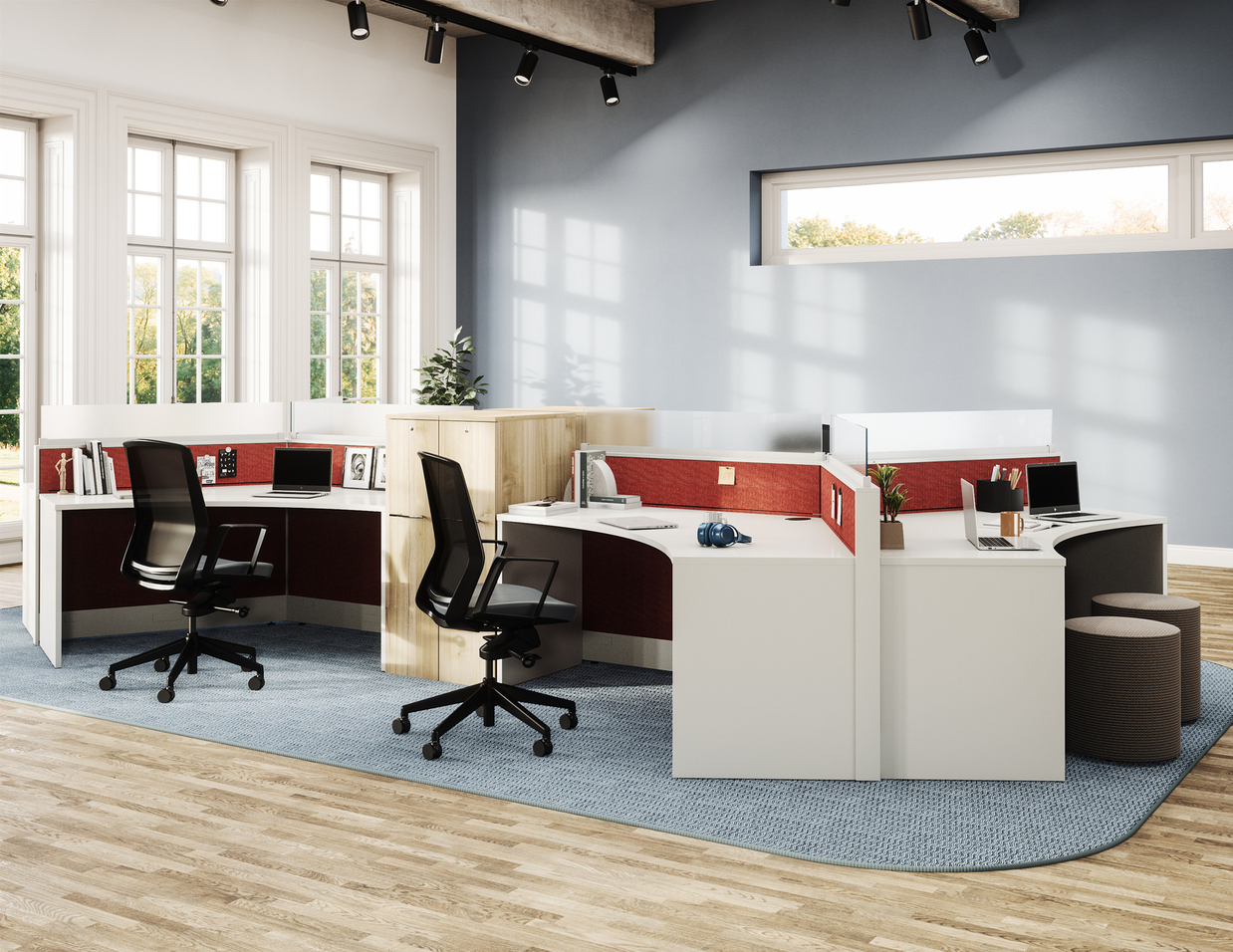
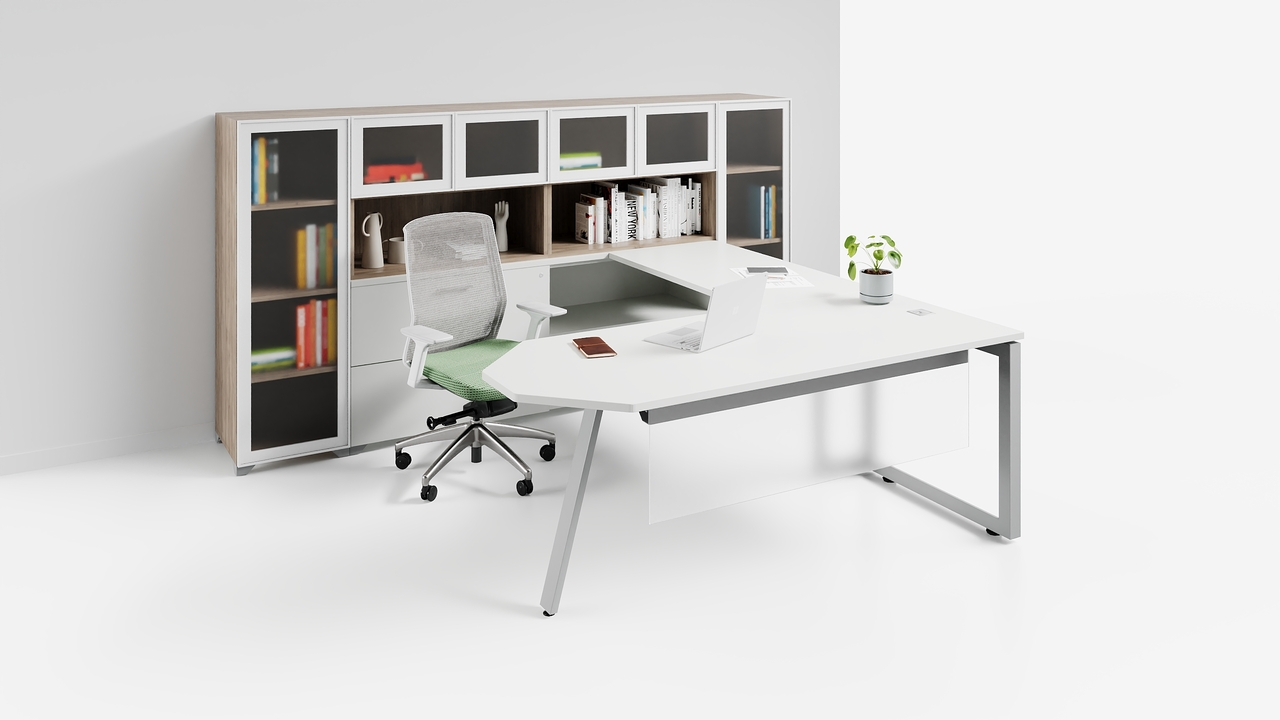
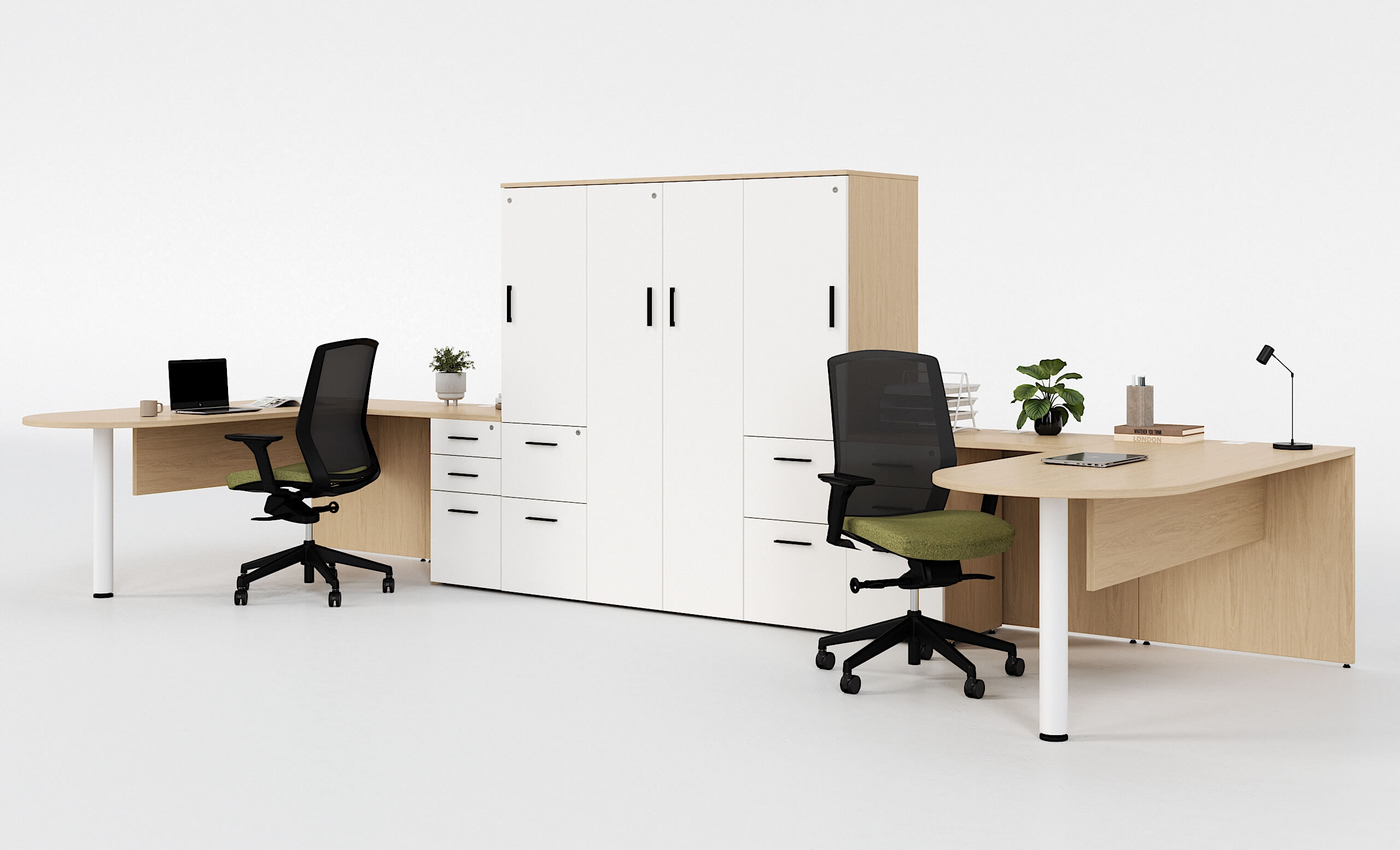
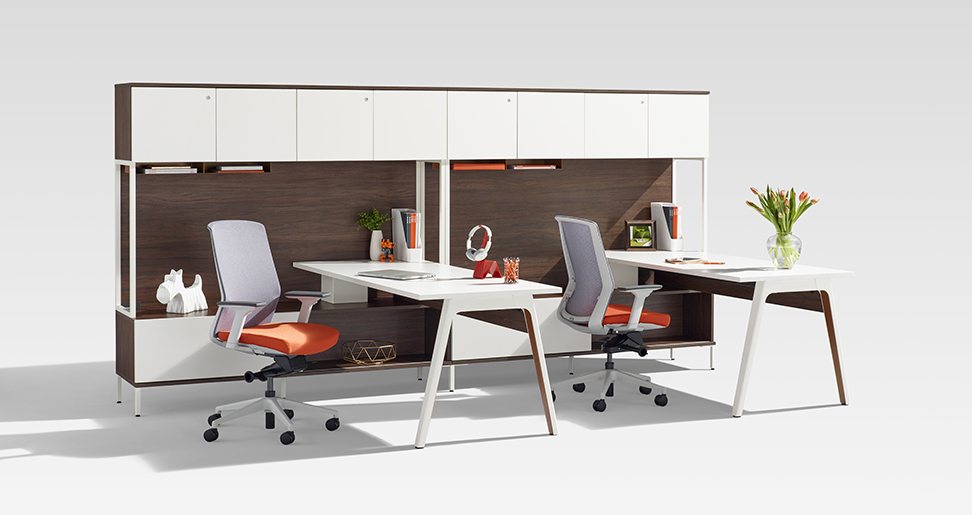
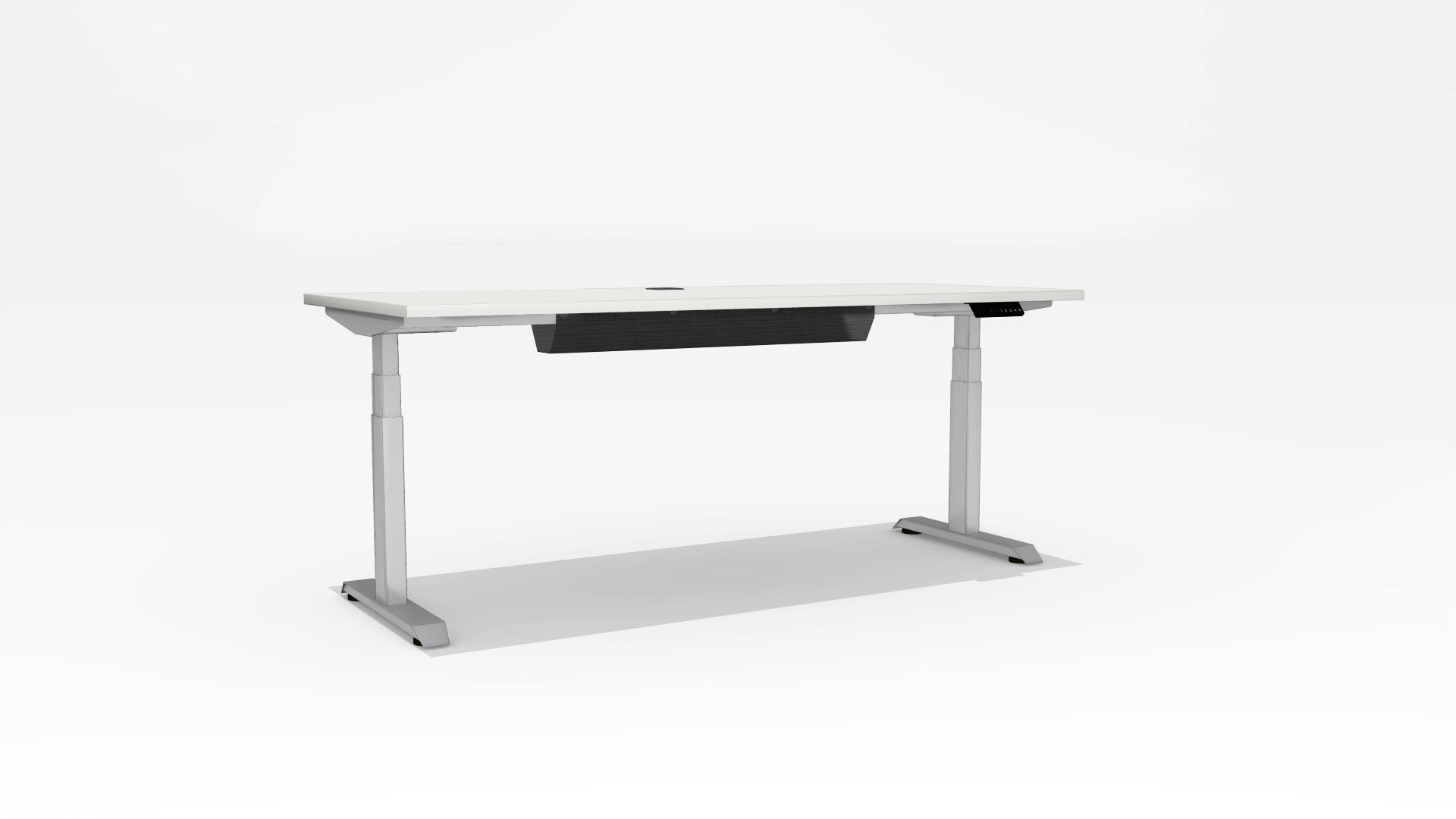
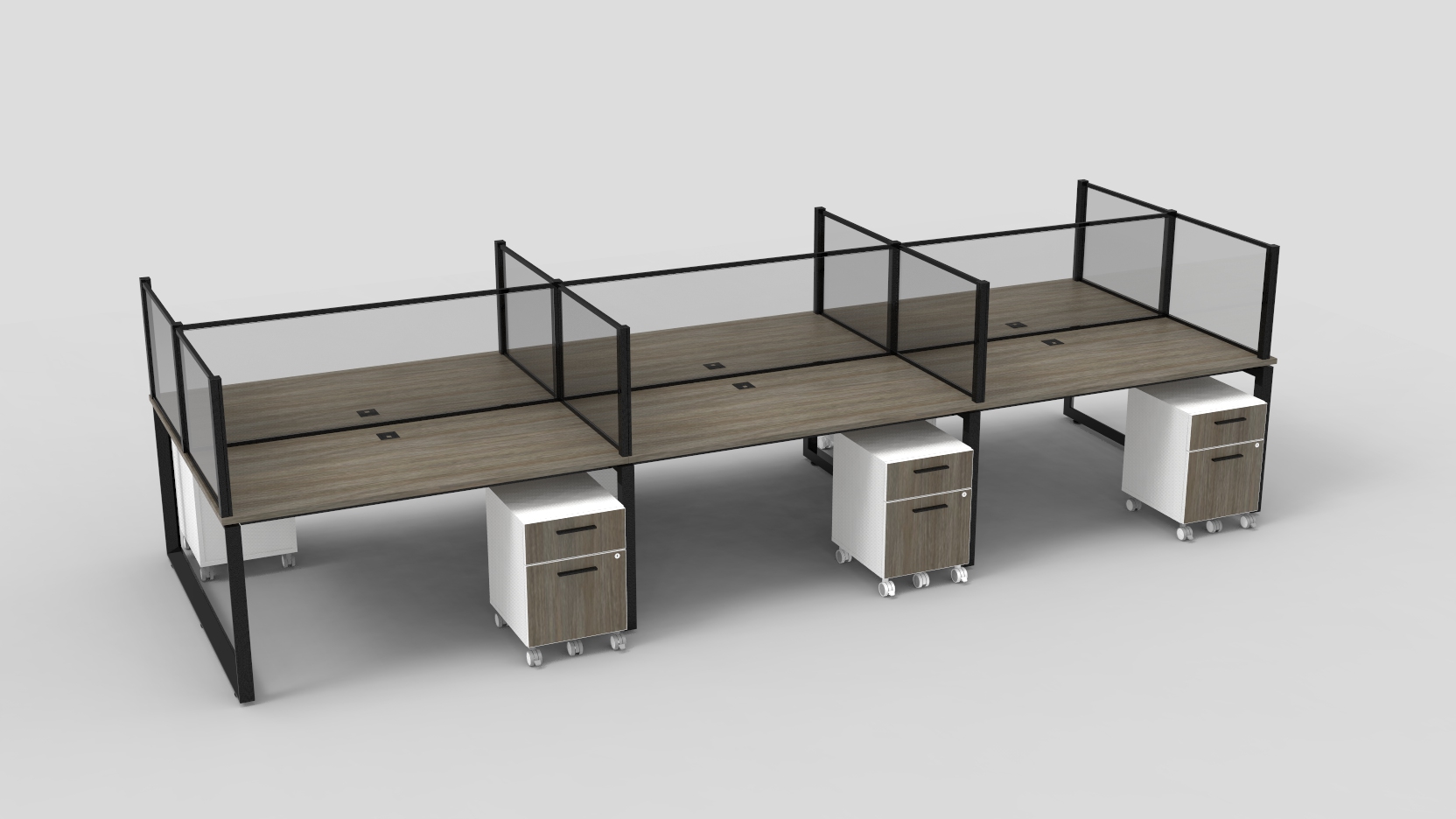
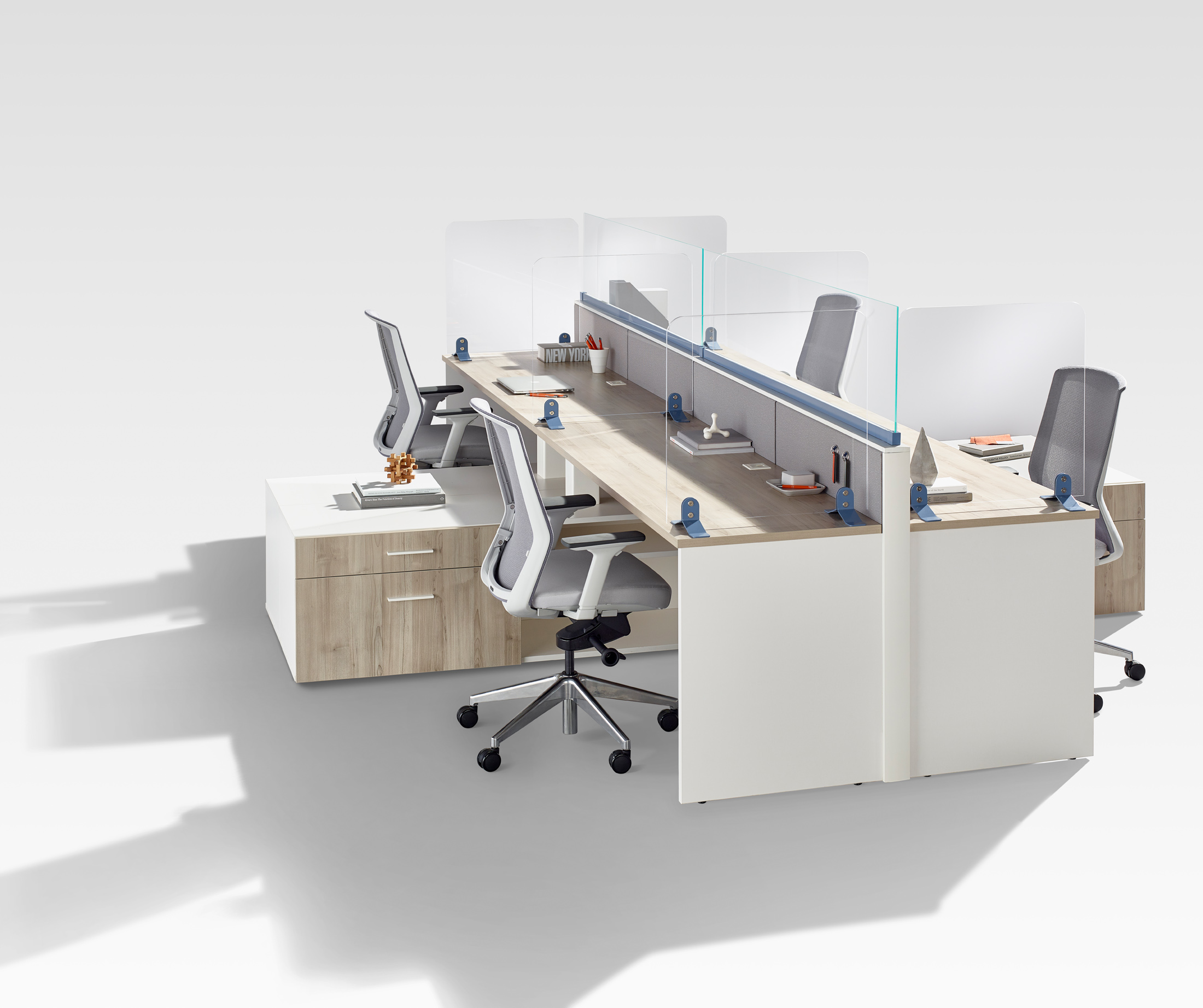
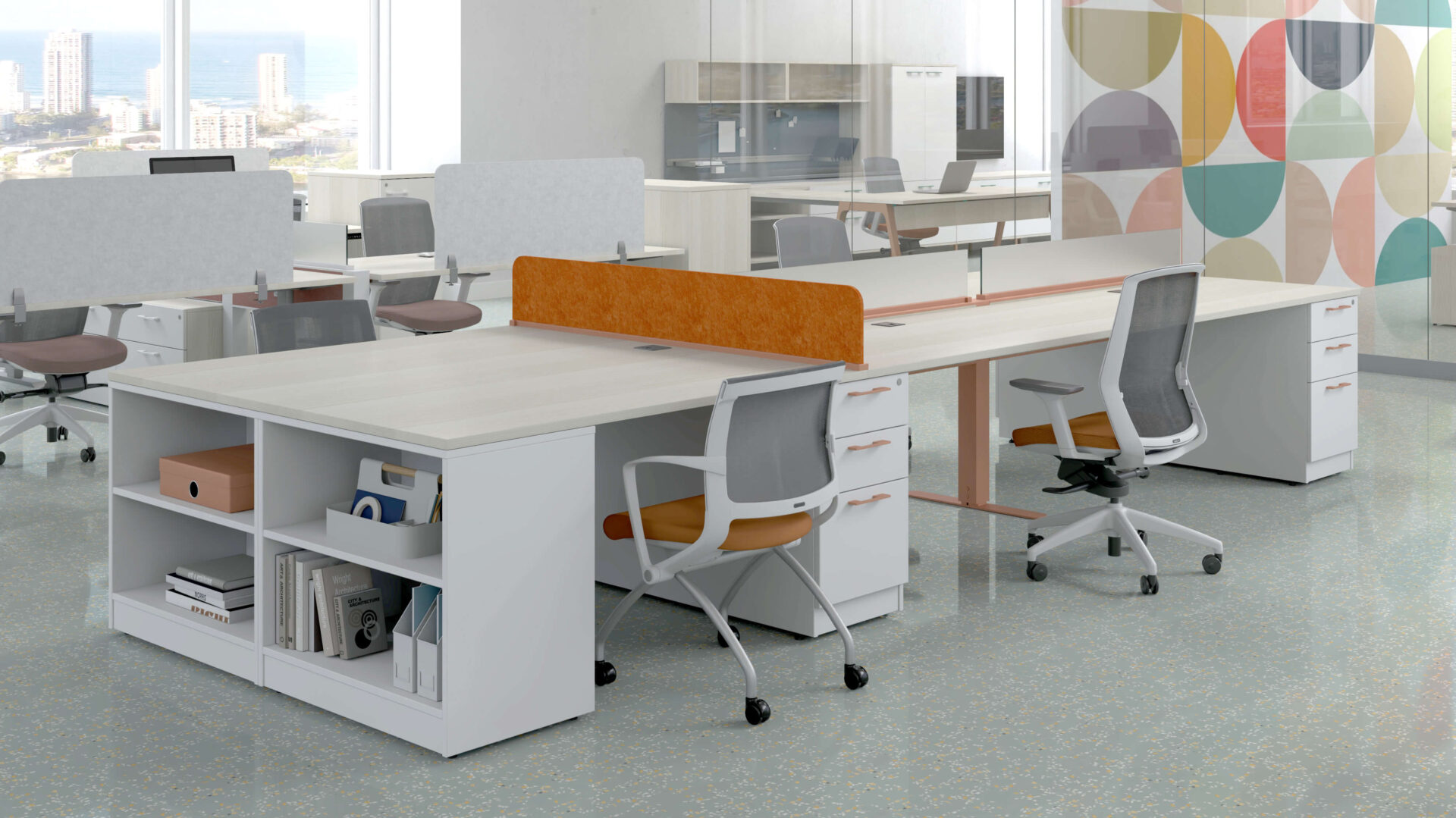
These planning strategies are supported by adaptable workplace solutions. Height-adjustable workstations, such as Volley, encourage movement throughout the day while accommodating a wide range of users and working styles. Modular systems like Switch and Cosmo make it easy to reconfigure layouts as teams evolve, helping workplaces remain functional long after the initial installation.
By creating environments that support movement, flexibility, and choice, Designers can respond to changing employee needs without designing for one specific generation.
Accessibility Goes Beyond Compliance
Inclusive workplace design extends well beyond meeting accessibility requirements.
Research shows that truly inclusive environments consider physical, sensory, and cognitive experiences throughout the entire user journey. This includes everything from circulation paths and reach ranges to lighting quality, acoustic comfort, visual distractions, intuitive technology, and clear wayfinding.
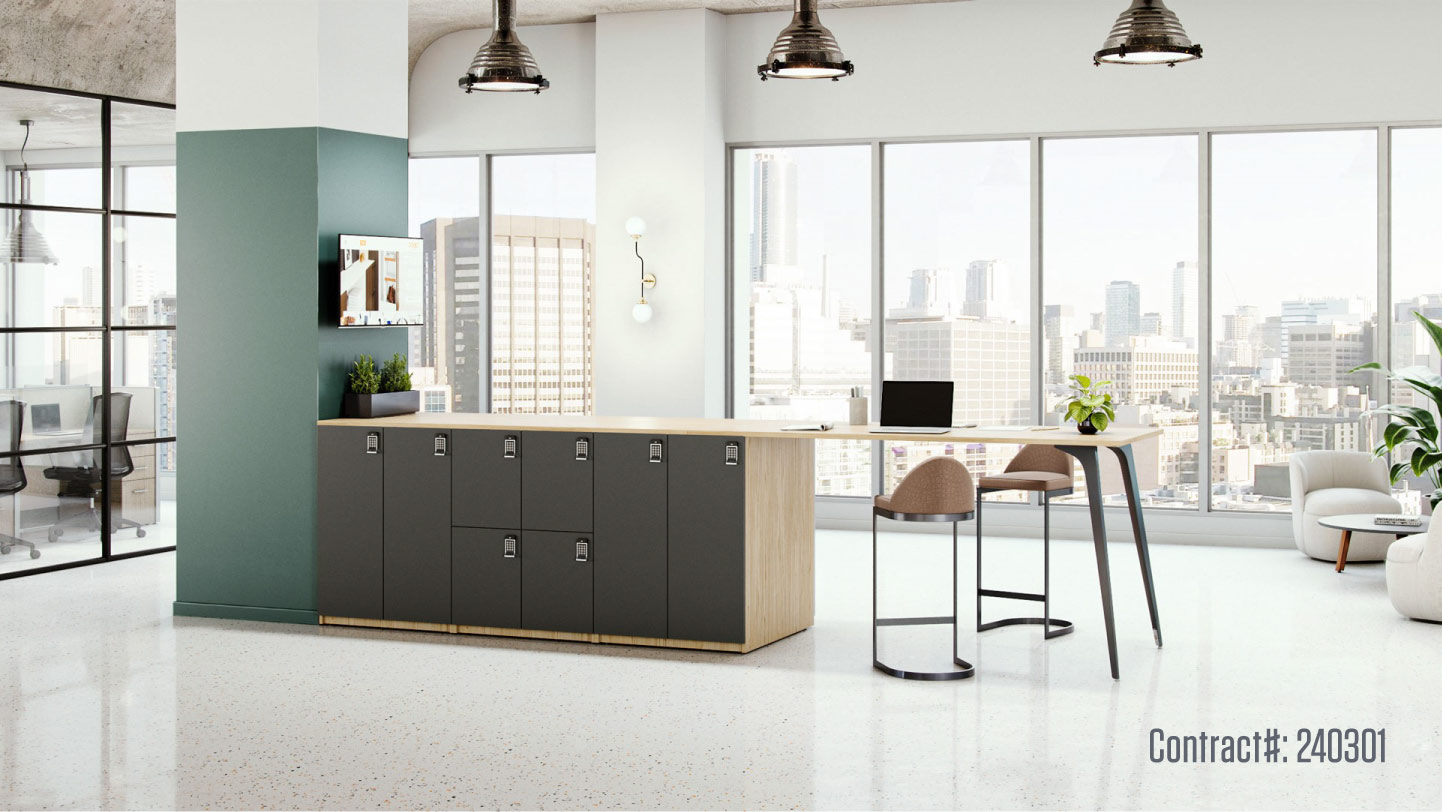
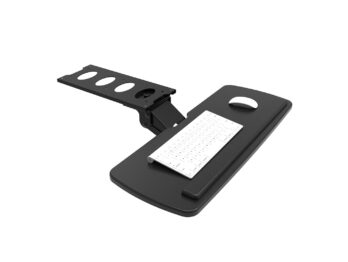
Inclusive design also considers whether shared amenities are easy to access, whether commonly used tools, storage, and power are comfortably within reach, and whether every employee can move through the workplace with confidence and ease.
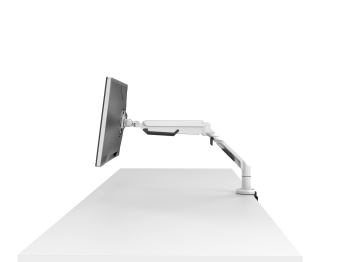
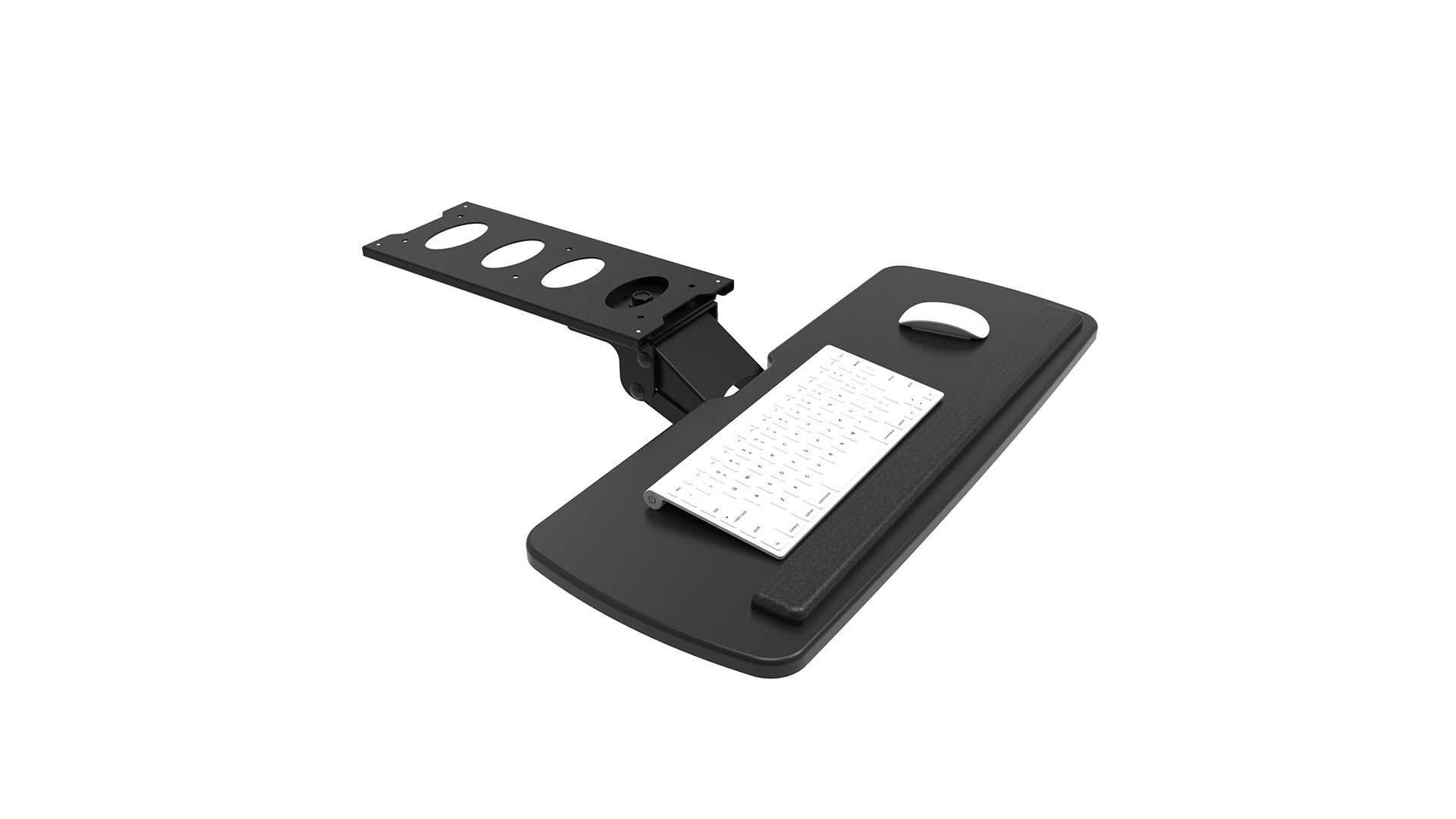
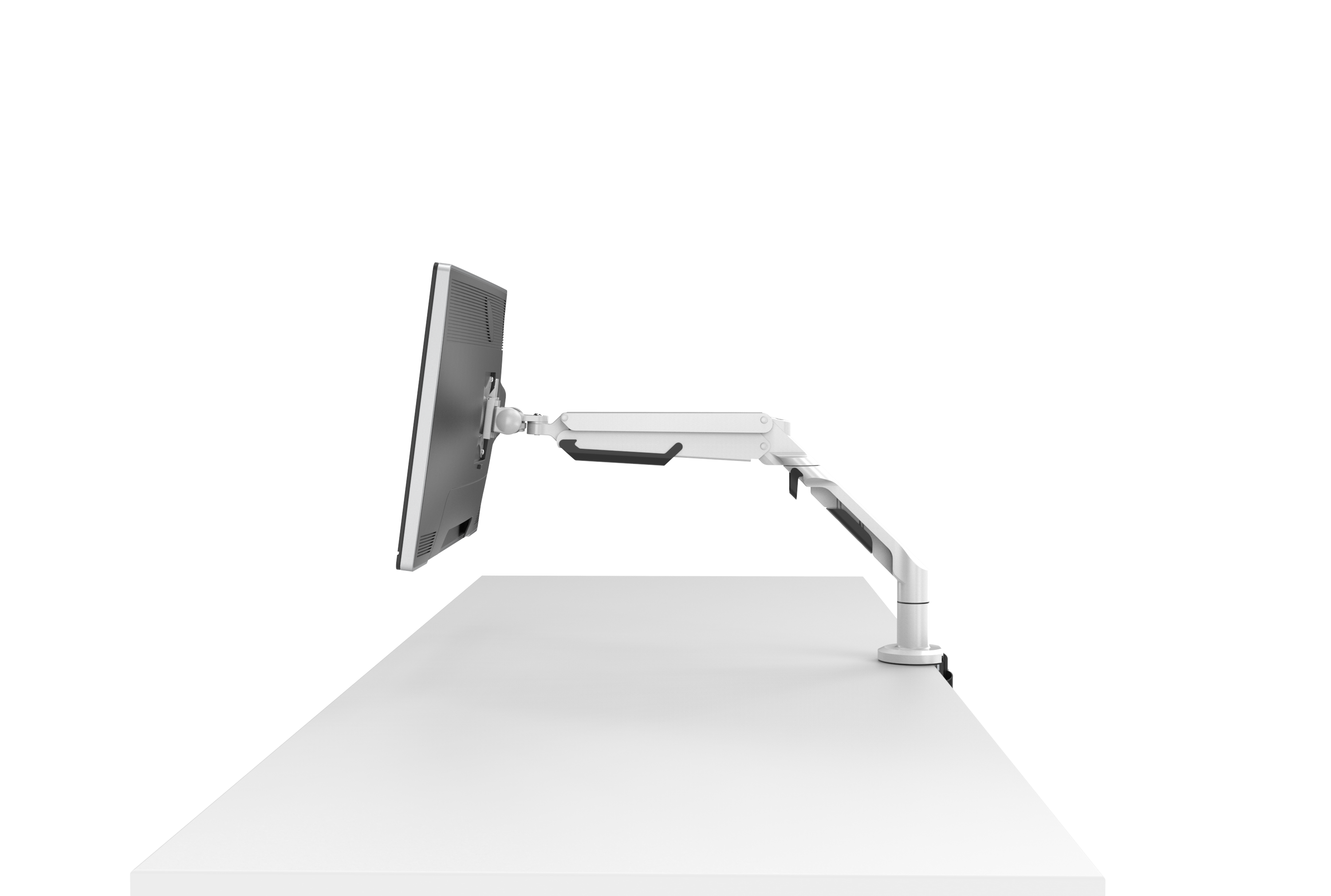
Furniture plays an important role in creating these experiences. Height-adjustable desks help accommodate users with different physical needs while encouraging healthier movement throughout the day. Ergonomic workstation planning, thoughtful lighting design, and furniture that supports a range of body sizes all contribute to greater comfort while reducing physical strain during long periods of work.
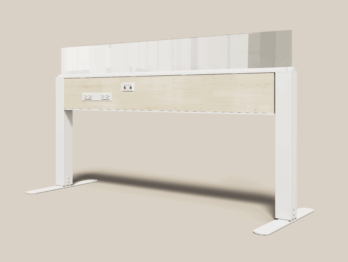
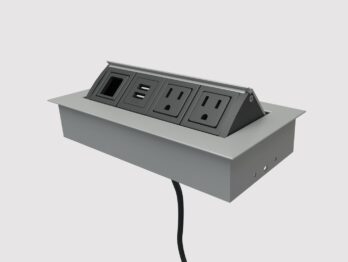
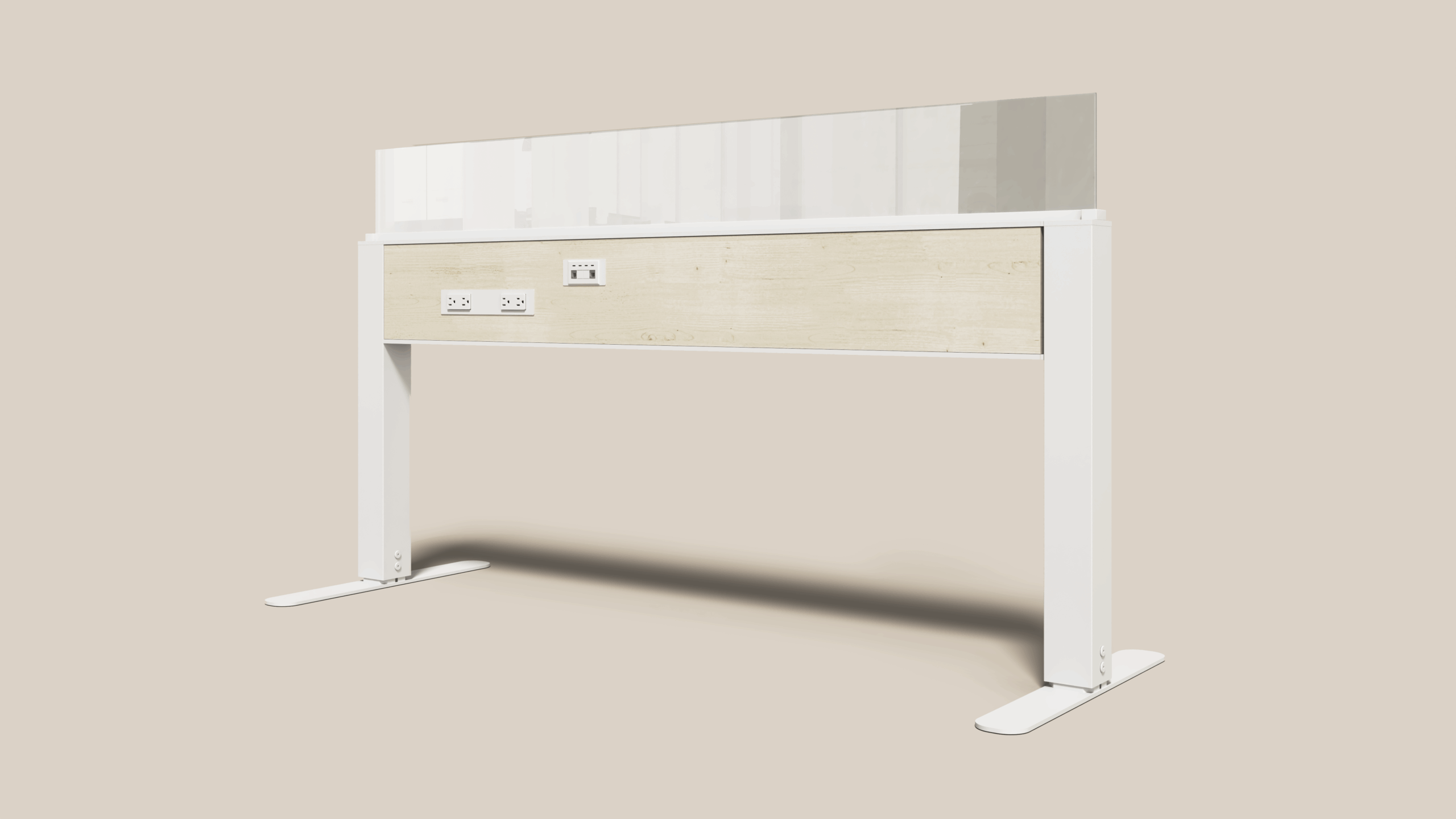
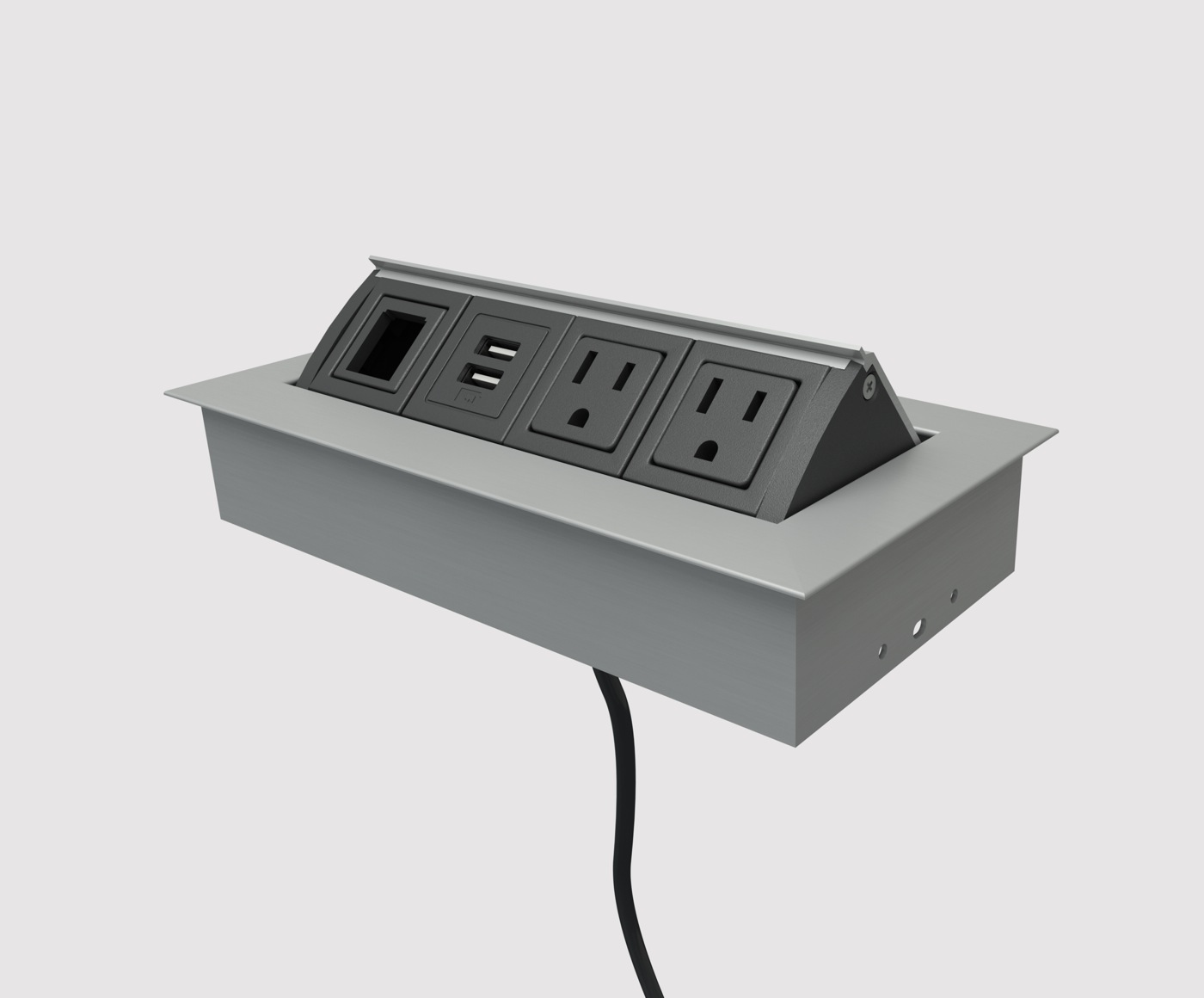
Integrated power solutions such as Bridgeway further improve accessibility by bringing power closer to where work happens, reducing clutter while making technology easier to use throughout collaborative environments.
Rather than treating accessibility as standard, Designers have an opportunity to create workplaces that are intuitive, comfortable, and usable for the broadest possible range of people.
Balancing Focus and Collaboration
As organizations continue embracing hybrid work and open workplace strategies, balancing collaboration with focused work has become increasingly important.
Research consistently identifies noise and speech distraction as some of the largest sources of workplace dissatisfaction. Employees need places where they can concentrate, but they also benefit from environments that encourage planned meetings, informal conversations, mentoring opportunities, and the spontaneous knowledge sharing that often drives innovation.
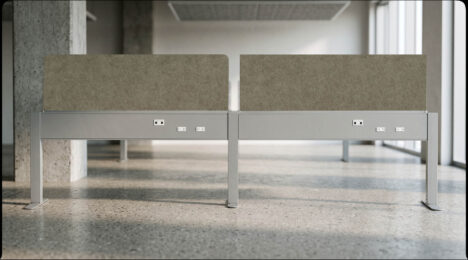
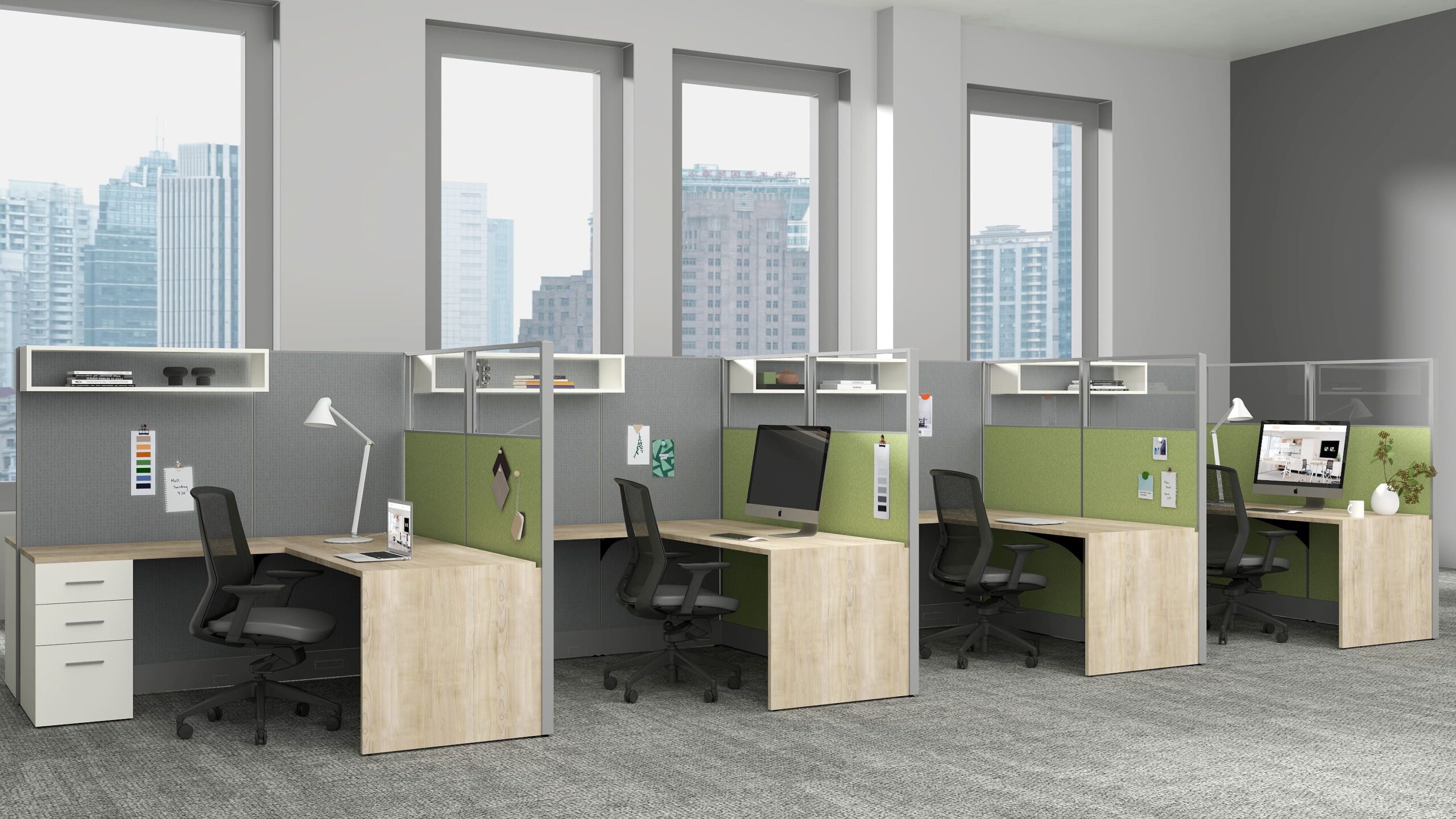
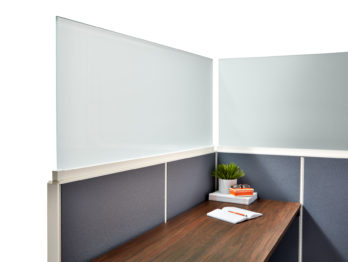
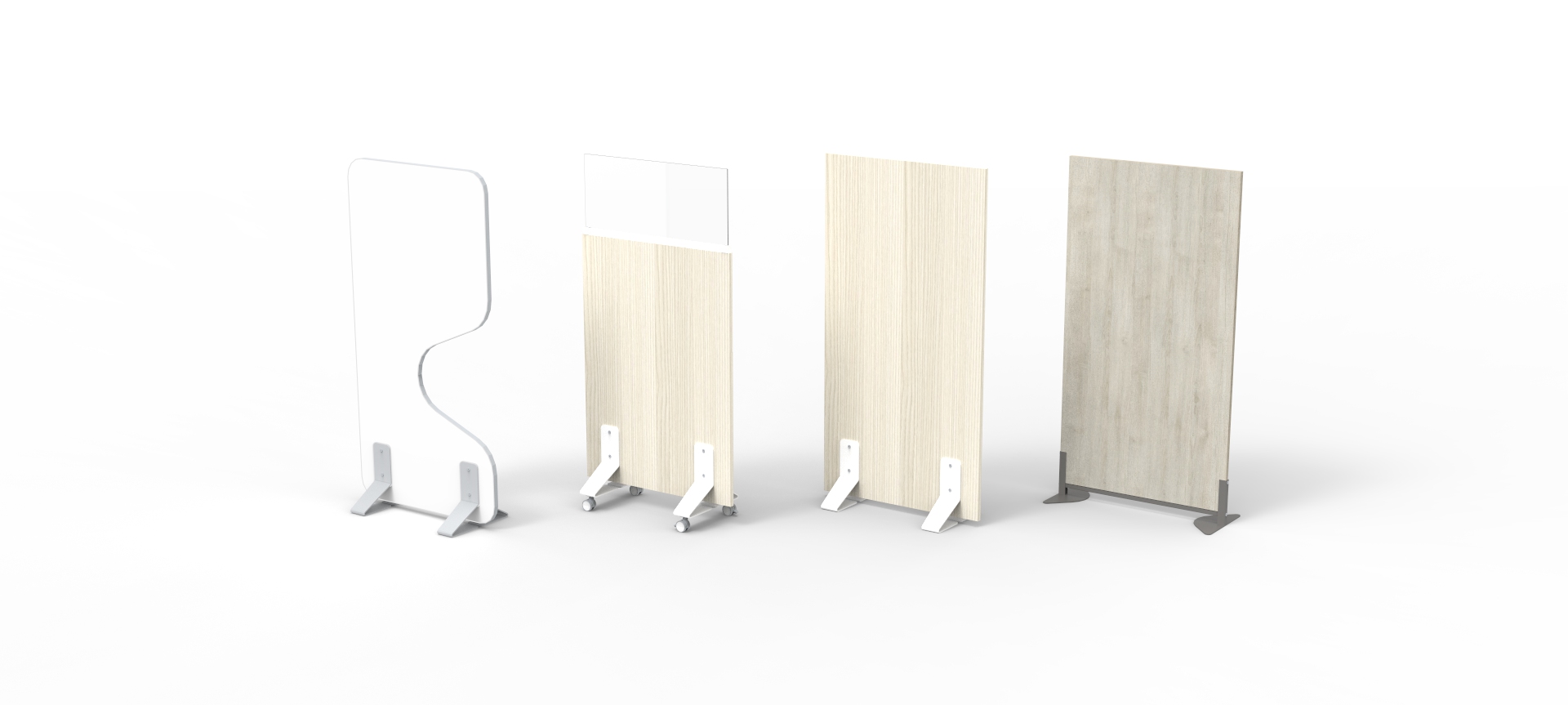
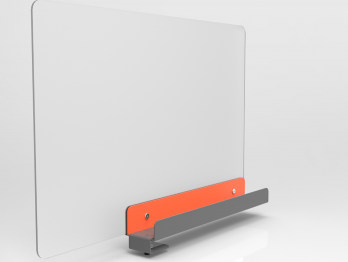
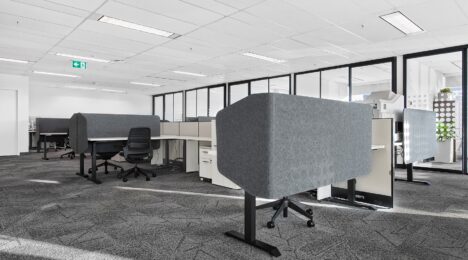
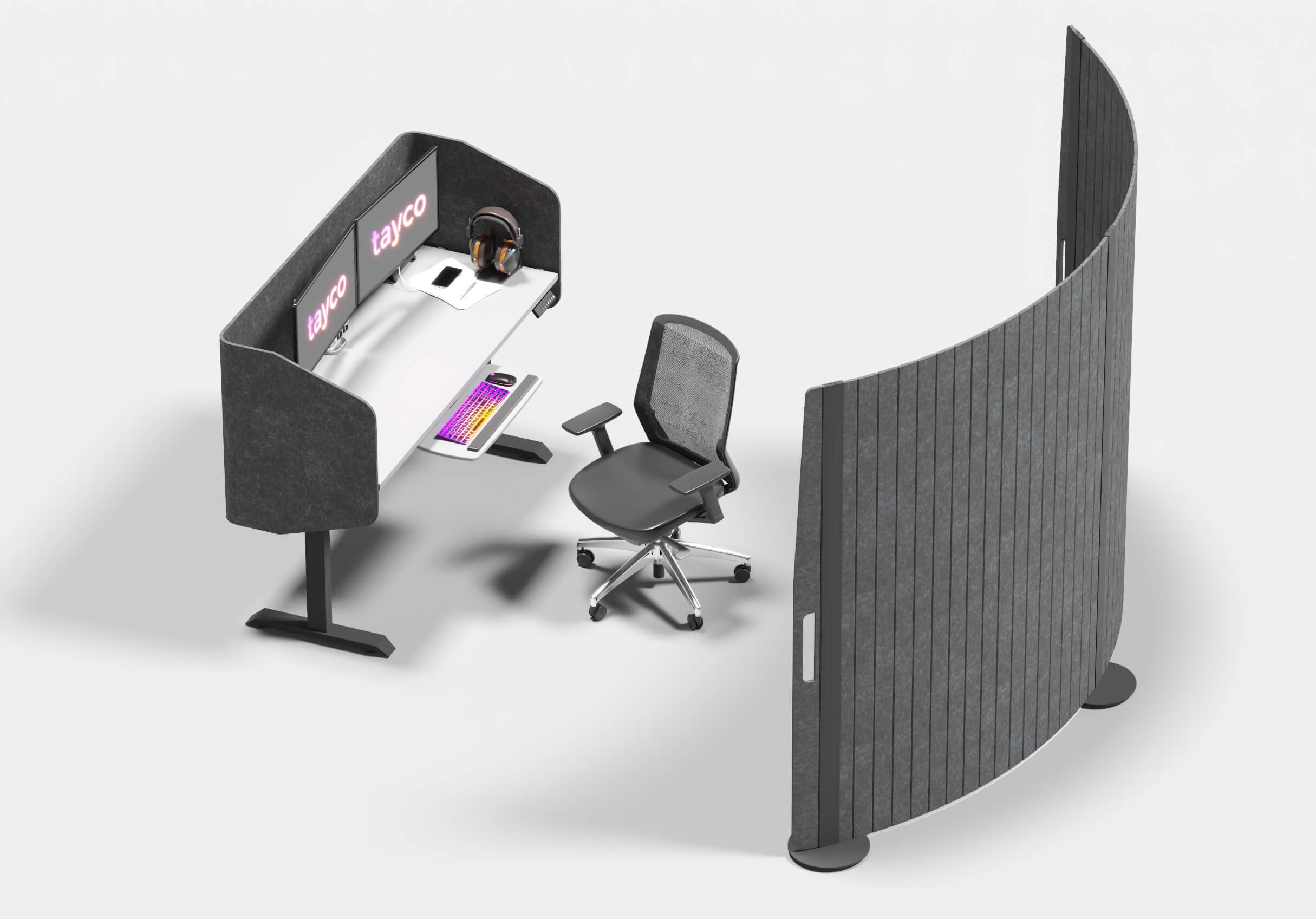
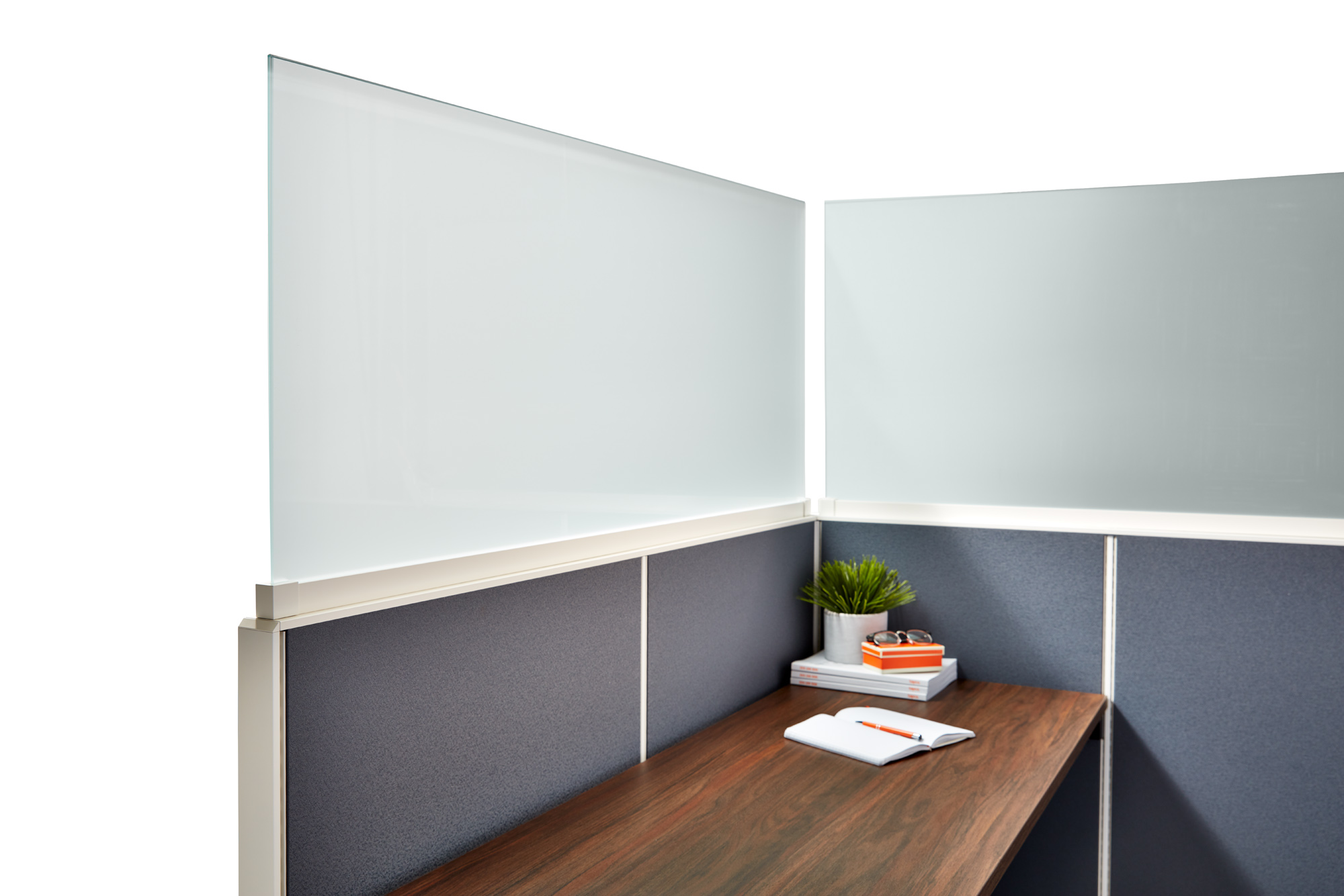
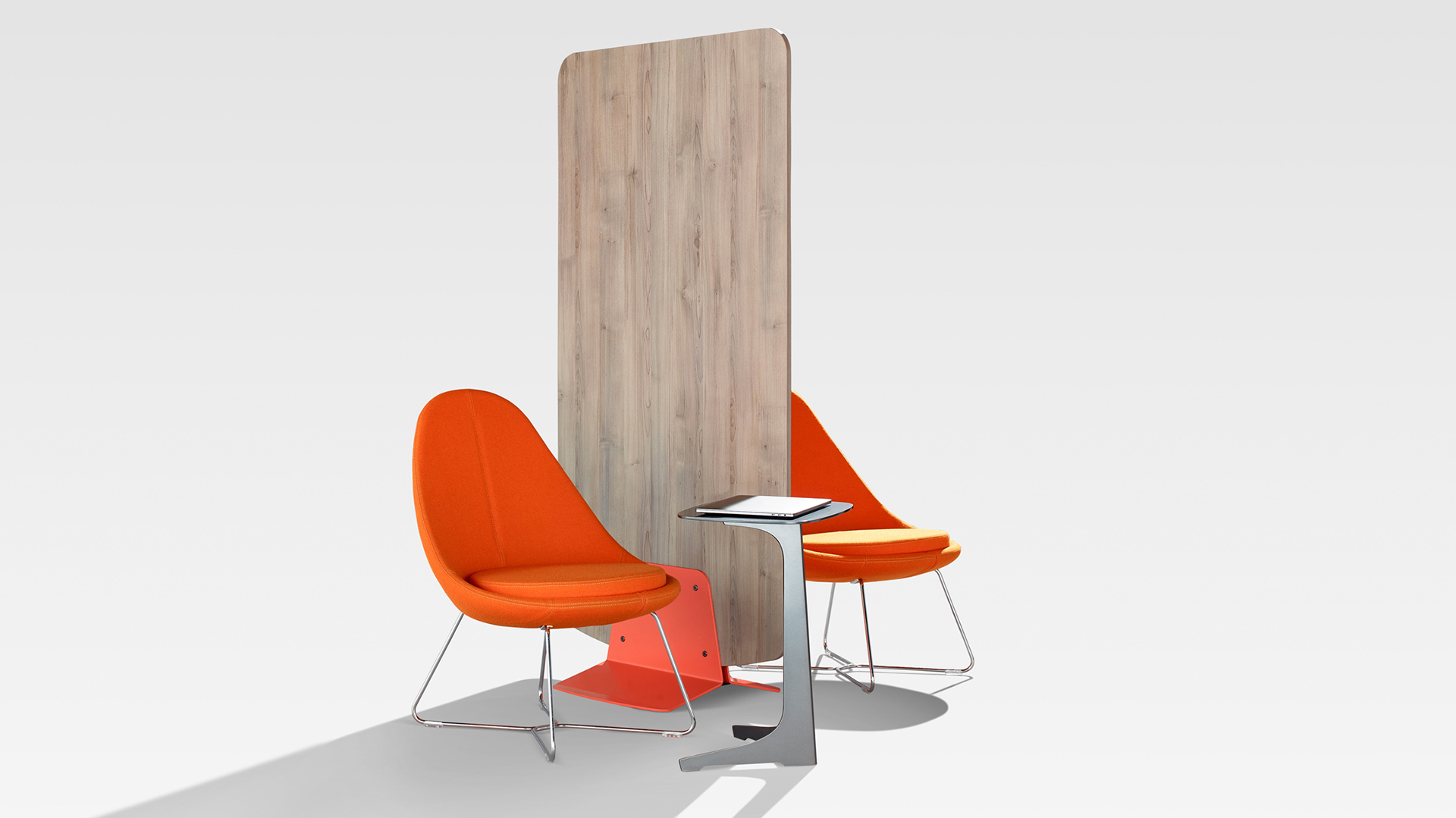
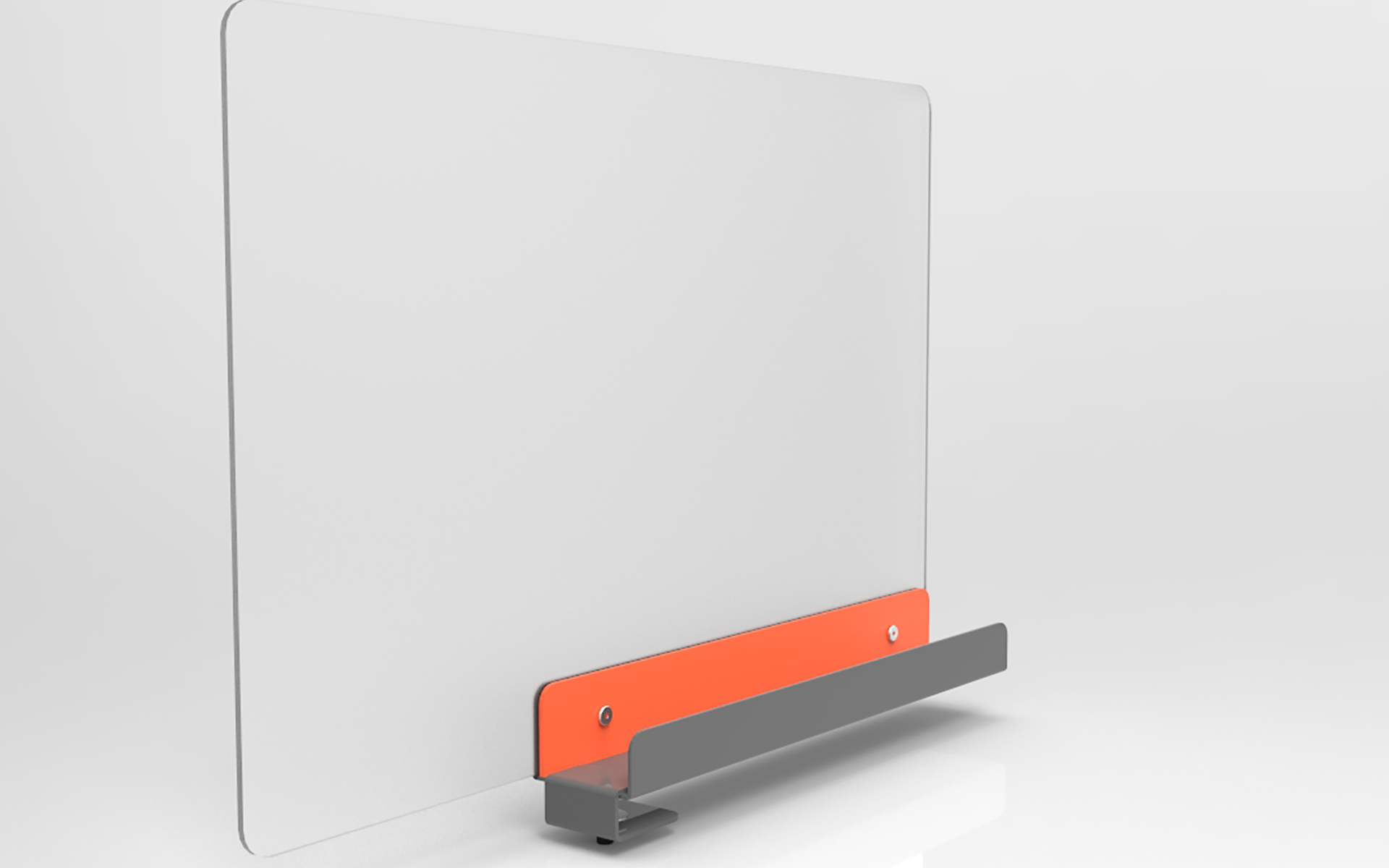
Acoustic materials play an important role in achieving this balance. Solutions like Echo PET help reduce both visual and acoustic distractions while maintaining openness throughout the workplace. Whether used as privacy screens, modesty panels, acoustic dividers, or wall applications, PET solutions support focused work without isolating employees from the broader workplace.
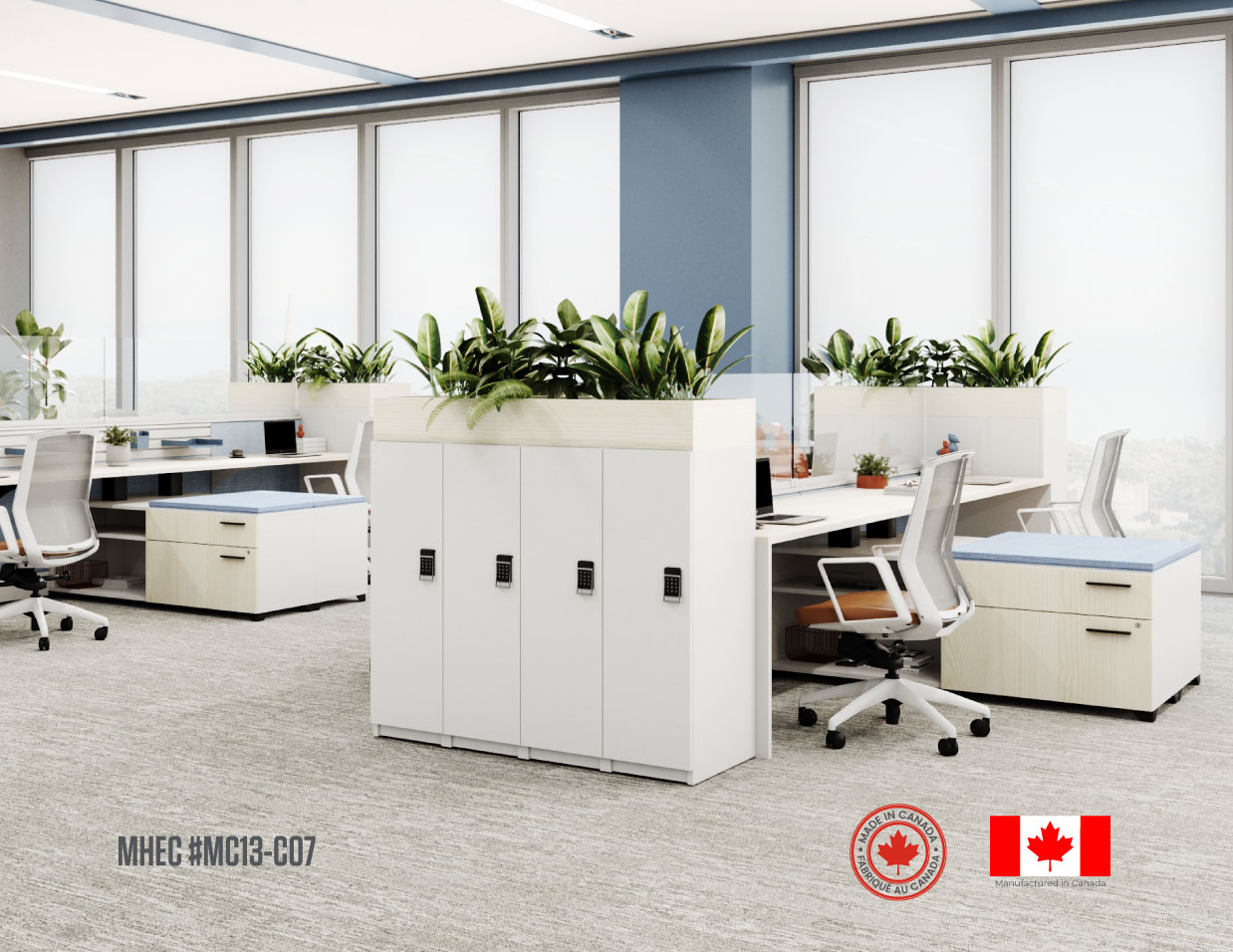
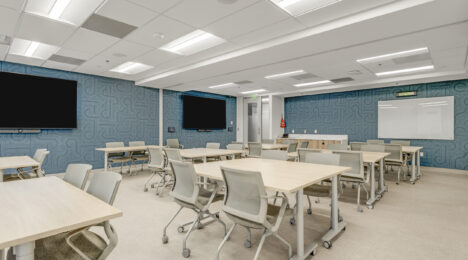
At the same time, collaborative settings equipped with integrated power, movable furniture, adaptable layouts, and accessible technology allow Teams to transition seamlessly between individual work and group activities throughout the day.
Designing for Change
Perhaps the most important takeaway from the research is that workplaces should not be designed solely for today’s workforce.
Organizations continue to evolve as technology advances, careers lengthen, employee expectations shift, and business priorities change. Adaptability has therefore become one of the most valuable design strategies available.
Modular furniture systems, reconfigurable workstations, integrated power, acoustic solutions, and flexible planning strategies allow organizations to adjust their workplaces over time rather than undertaking complete redesigns.
The most resilient workplaces aren’t designed around today’s workforce alone. They’re designed to evolve alongside changing organizations, emerging technologies, and the people who will use them years from now.
By investing in adaptable solutions today, Designers create workplaces capable of supporting employees through different career stages, organizational growth, and evolving ways of working.
Looking Ahead
The future of workplace design isn’t about creating separate environments for different generations. It’s about creating environments that support different people, different tasks, and different ways of working.
At Tayco, these research-backed principles continue to shape the development of workplace solutions designed to evolve alongside the people who use them. From adaptable systems like Switch and Cosmo, to height-adjustable workstations like Volley, integrated power through Bridgeway, and acoustic privacy with Echo PET, each solution is designed to support flexibility, accessibility, and long-term performance.
As workplace expectations continue to evolve, one principle remains constant: the most successful workplaces aren’t designed around generational stereotypes.
They’re designed around people.
Put These Principles Into Practice
Understanding the principles of multigenerational workplace design is only the first step. Applying them consistently throughout the design process is what creates workplaces that are truly inclusive, adaptable, and built to last.
To help Designers and Dealers put these concepts into practice, Tayco has developed the Designing for a Multigenerational Workplace Designer Evaluation Checklist. This practical resource features seven key areas of evaluation and 29 design questions to help assess workplace environments through the lens of accessibility, ergonomics, acoustic comfort, collaboration, flexibility, technology, and long-term adaptability.
Whether you’re planning a new workplace, renovating an existing office, or reviewing a design with a Client, use this checklist to guide meaningful conversations and ensure your workplace supports a diverse range of people, workstyles, abilities, and career stages—not just today, but well into the future.
Download the Designer Evaluation Checklist and use it as a practical tool for creating workplaces that are more flexible, inclusive, and future-ready.